Category METEOROLOGY

Hydrostatic Balance

OIG3 87

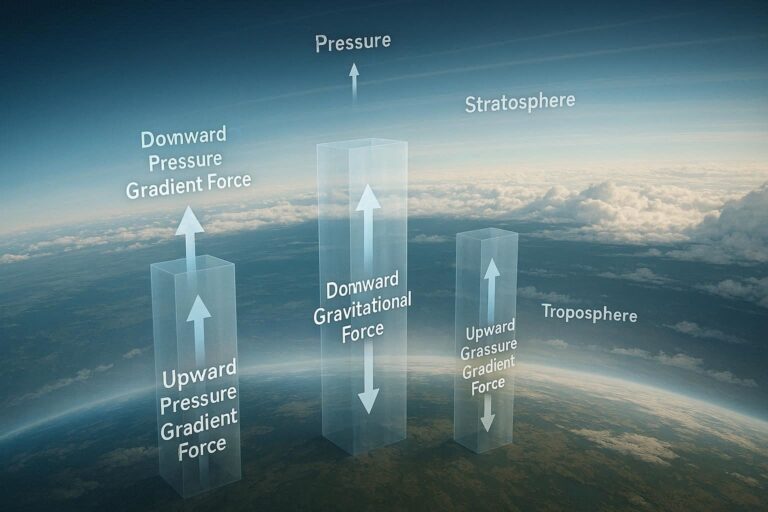
Hydrostatic balance is one of the most fundamental concepts in atmospheric science. It describes the state of equilibrium between two opposing forces acting on a parcel of air: the downward pull of gravity and the upward push of the pressure…
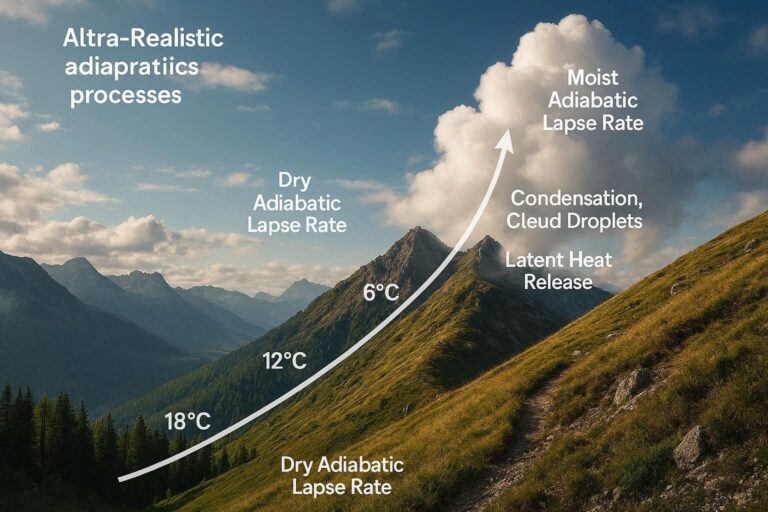
Adiabatic Processes and Lapse Rates

OIG2 1 62

The atmosphere is in a constant state of motion. Air rises, sinks, cools, and warms—all following a set of physical laws that govern how temperature changes with altitude. Two of the most fundamental concepts behind these atmospheric dynamics are adiabatic…

Coriolis Effect and Rotational Dynamics

OIG1 95

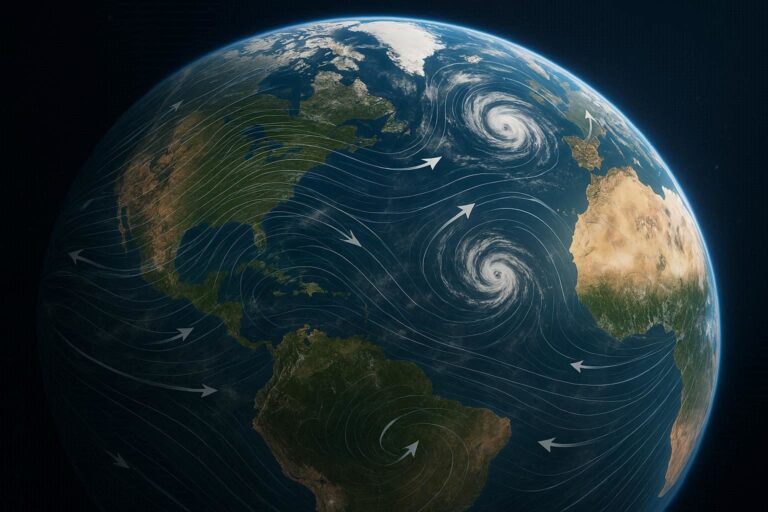
The Coriolis effect is an apparent deflection of moving objects caused by Earth’s rotation. It influences large-scale systems like weather patterns, ocean currents, and even ballistic trajectories. Understanding rotational dynamics—the physics behind rotating systems—explains why and how this deflection occurs.…

Jet Streams and Upper-Level Flow Dynamics

OIG2 96

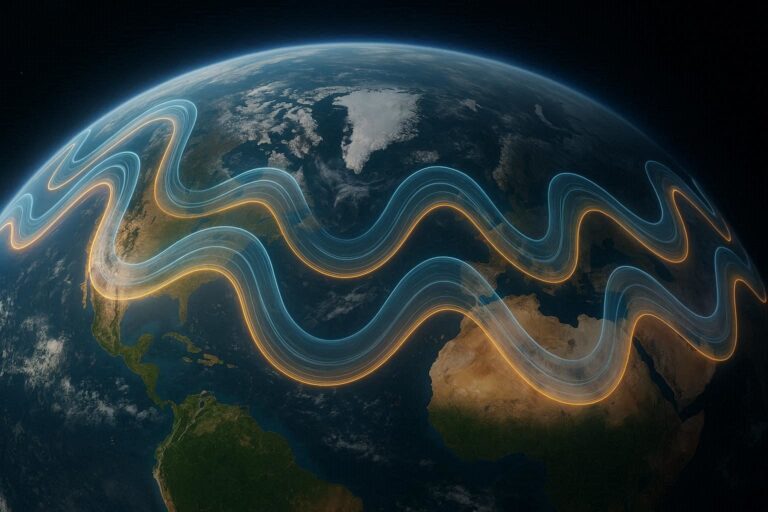
Jet streams are fast-moving air currents in the upper atmosphere that shape weather patterns across the globe. Driven by temperature gradients and Earth’s rotation, these high-altitude winds influence everything from storm tracks and seasonal temperatures to aviation routing and long-range…

Thermal Wind Relationship

OIG1 96

The atmosphere is not a still, uniform layer of air. It moves, shifts, and responds to temperature differences across the Earth’s surface in ways that shape everything from daily weather patterns to the behavior of global wind systems. Among the…

Rossby Waves

OIG1.2 mambODgxSg

Somewhere high above the Earth’s surface, between 10 and 50 kilometers up, enormous waves of air ripple slowly around the planet. They are not visible to the naked eye, nor do they make a sound. Yet these atmospheric structures—known as…

Gradient Wind Balance

OIG2.Gwe4hwkRQ6juHqJH2

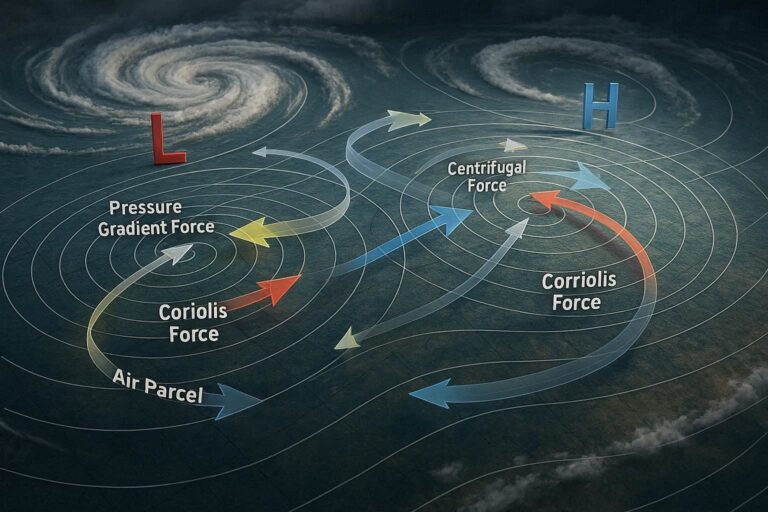
Gradient wind balance is a three-way equilibrium between the pressure gradient force, the Coriolis force, and centripetal acceleration that governs airflow along curved isobars in the atmosphere. Unlike geostrophic balance, gradient wind balance accurately describes motion around high- and low-pressure…

Quasi-Geostrophic Theory

OIG3 88

Quasi-geostrophic (QG) theory stands as one of the most elegant and enduring frameworks in dynamic meteorology. Developed in the mid-twentieth century, it provides a mathematically tractable way to understand the large-scale circulation of the atmosphere—explaining why weather systems form, evolve,…

Vorticity and Atmospheric Spin

OIG2.edDrByHA8lb

Vorticity is a measure of local rotation in a fluid, and in atmospheric science, it serves as one of the most powerful indicators of storm development, wind behavior, and large-scale weather patterns. Understanding vorticity helps meteorologists predict everything from gentle…