Category PHYSICAL METEOROLOGY

Introduction to Physical Meteorology

OIG2 2 39

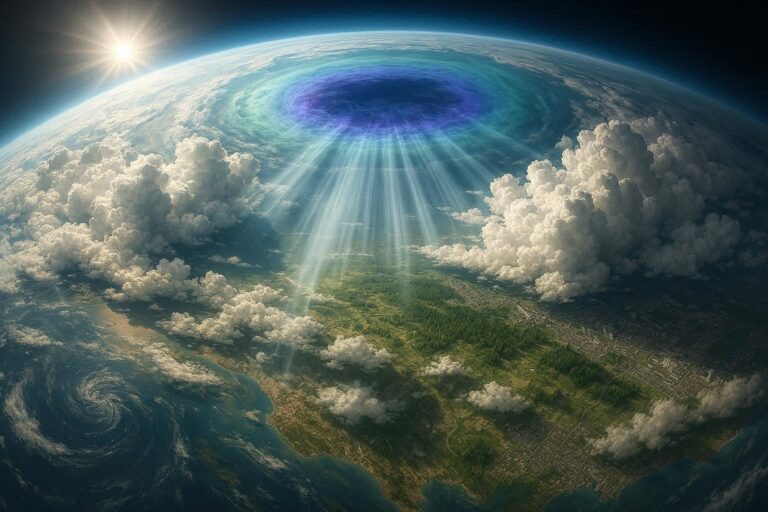
Physical meteorology is the branch of atmospheric science that seeks to understand the physical processes governing Earth’s atmosphere—from the formation of clouds and precipitation to the behavior of electromagnetic radiation within the air. Unlike synoptic meteorology, which focuses on weather…

Atmospheric Aerosols and Climate Effects

OIG2 3 30

Atmospheric aerosols are tiny solid or liquid particles suspended in the air that significantly influence Earth’s climate by scattering sunlight, seeding clouds, and altering precipitation patterns. Their effects can be both cooling and warming, depending on their composition and location,…

Heat Transfer in the Atmosphere

OIG1 97

Earth’s atmosphere is a dynamic, constantly moving system driven by the transfer of heat. From the gentle warmth of morning sunlight to the violent churning of tropical storms, virtually every atmospheric phenomenon traces back to how energy moves through the…

Humidity and Atmospheric Moisture

OIG2 4 19

Humidity is one of the most consequential yet least understood elements of Earth’s atmosphere. It shapes weather systems, governs human comfort, regulates ecosystems, and influences everything from agricultural productivity to building integrity. Despite its invisibility, atmospheric moisture is anything but…

Lapse Rates: Dry vs Moist

OIG1 1 59

Understanding how temperature changes with altitude is fundamental to meteorology, aviation, and atmospheric science. Lapse rates—the rate at which air temperature decreases as altitude increases—govern everything from cloud formation to severe weather development. Two distinct types exist: the dry adiabatic…

Atmospheric Stability: Why Air Rises and Sinks

OIG2 5 13

Atmospheric stability determines whether air parcels rise freely or resist vertical movement. Stable air suppresses convection and favors calm conditions, while unstable air fuels thunderstorms and heavy precipitation. Understanding these dynamics is fundamental to weather forecasting, aviation safety, and climate…

Cloud Formation: Nucleation and Condensation

OIG2 6 8

Clouds are among the most visible and consequential phenomena in Earth’s atmosphere. They shape weather patterns, regulate surface temperatures, drive precipitation, and reflect solar radiation back into space. Despite their familiar appearance, the physical processes that bring clouds into existence…