
Aral Sea Disaster
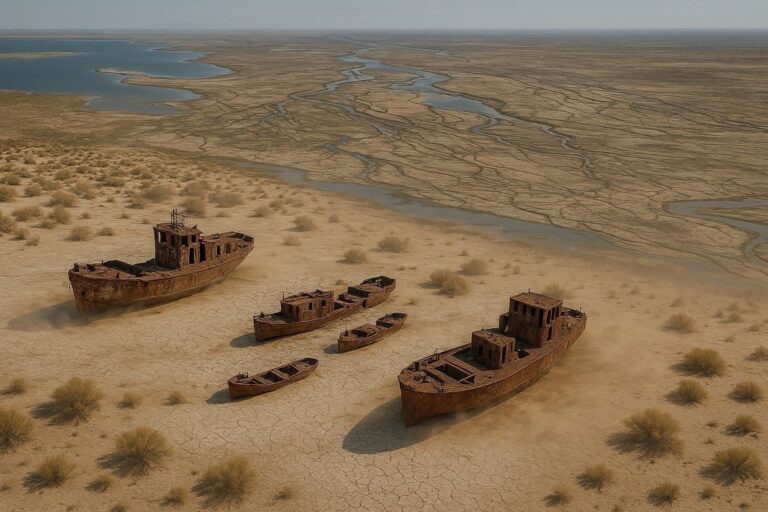
Once the fourth-largest lake in the world, the Aral Sea now exists as a fraction of its former self—a cautionary tale written in salt and sand. Over the course of just a few decades, one of Central Asia’s most vital…
Once the fourth-largest lake in the world, the Aral Sea now exists as a fraction of its former self—a cautionary tale written in salt and sand. Over the course of just a few decades, one of Central Asia’s most vital…
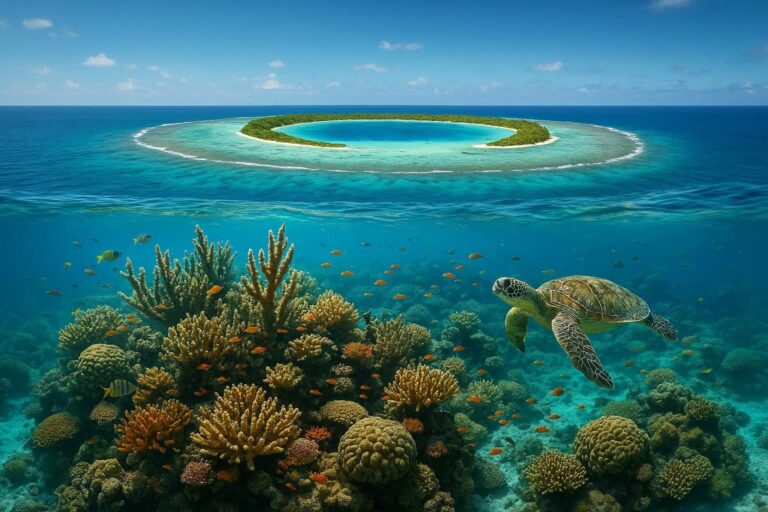
Coral reefs are marine structures built by tiny invertebrates called coral polyps. Atolls are a specific reef formation—ring-shaped islands surrounding a central lagoon. Together, these ecosystems cover less than 1% of the ocean floor yet support roughly 25% of all…
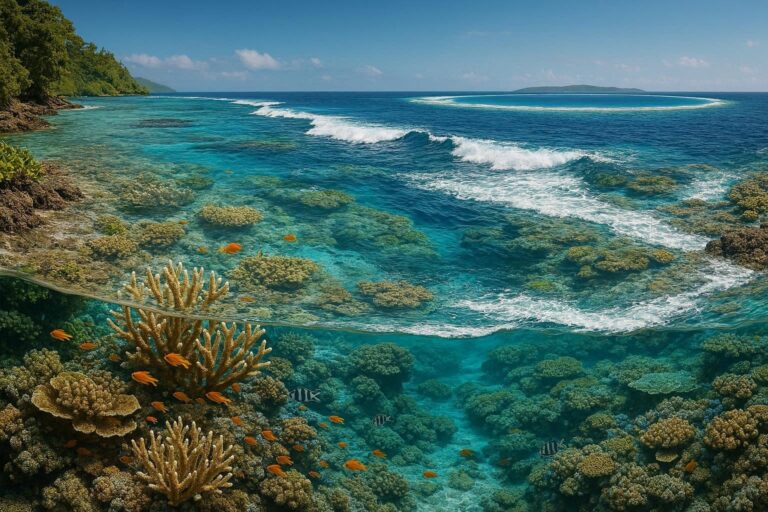
Coral reefs are classified into four main types—fringing reefs, barrier reefs, atolls, and patch reefs—each defined by its structure, location, and relationship to landmasses. These ecosystems cover less than 1% of the ocean floor yet support roughly 25% of all…
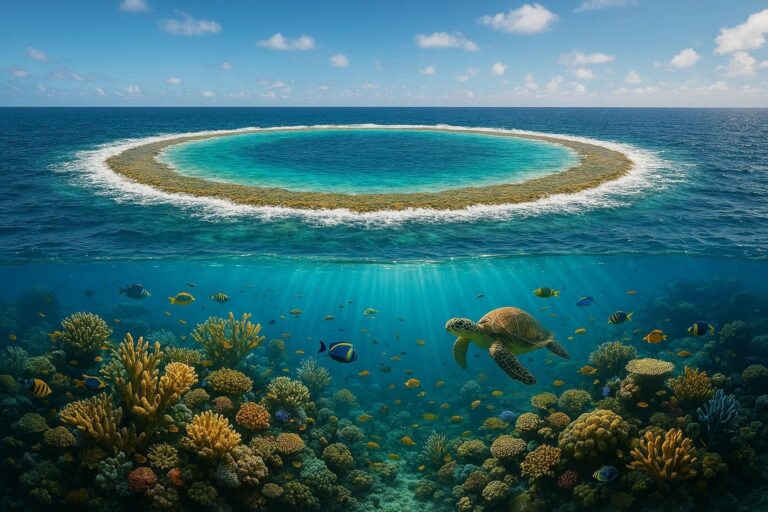
Scattered across the tropical oceans of the world, atolls are among the most striking geological formations on Earth. Ring-shaped islands of coral, enclosing a calm central lagoon, they appear almost too perfect to be natural—yet every one of them is…
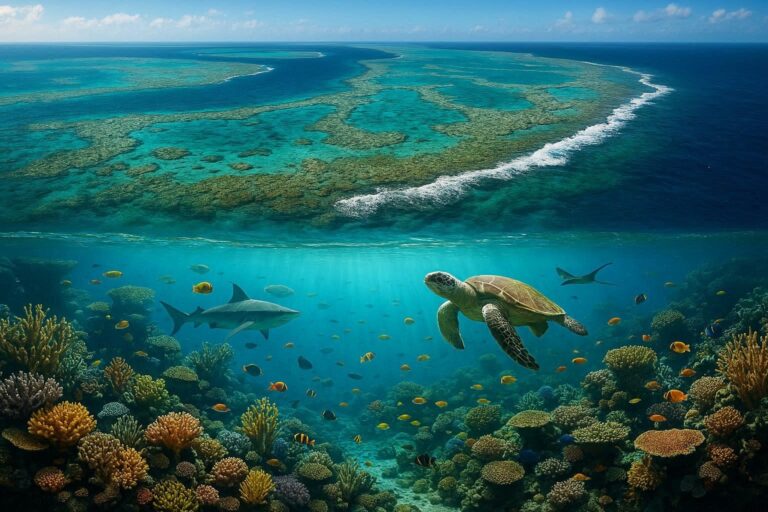
The Great Barrier Reef is the world’s largest coral reef system, stretching over 2,300 kilometers along the northeastern coast of Australia. It supports more than 9,000 known species, generates over AUD $6.4 billion annually for the Australian economy, and remains…
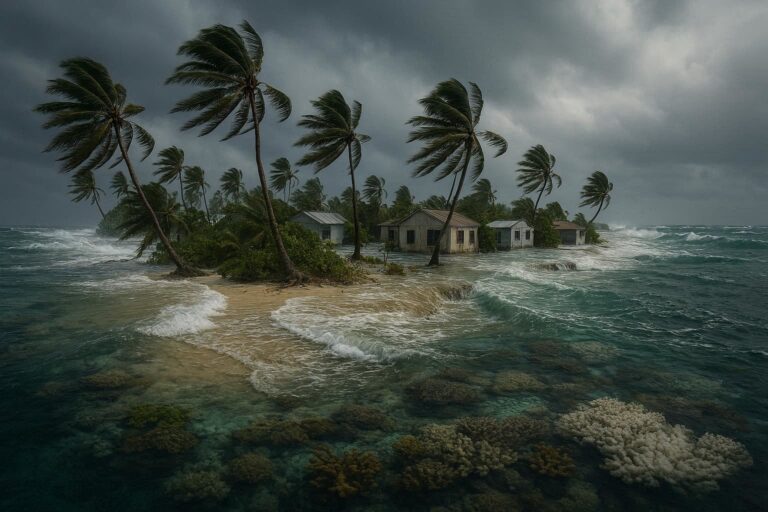
Atoll nations—low-lying island countries built on coral reefs—face existential threats from rising sea levels, intensifying storms, and ocean acidification driven by climate change. Nations like Tuvalu, Kiribati, and the Maldives stand to lose not just land, but their cultural identity,…
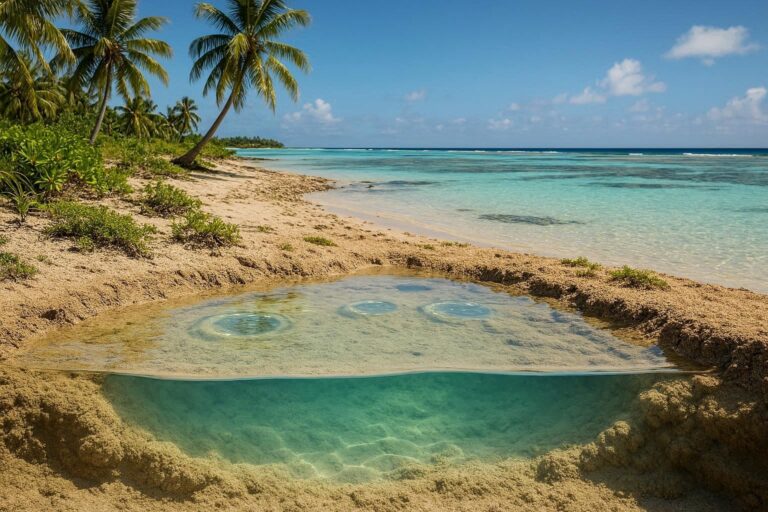
Atoll communities depend on a thin, buoyant layer of freshwater called a freshwater lens—formed entirely from rainwater trapped above denser seawater in porous coral sediment. Rising sea levels, storm surges, and increasing drought cycles are compressing these lenses, putting the…
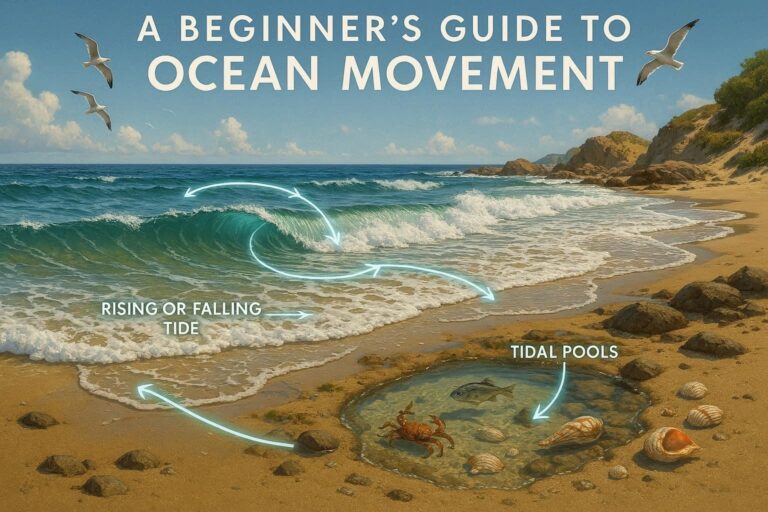
The ocean is never still. From the rhythmic rise and fall of water along a shoreline to the rolling swells that travel thousands of miles across open water, the sea exists in a state of constant motion. For many people,…
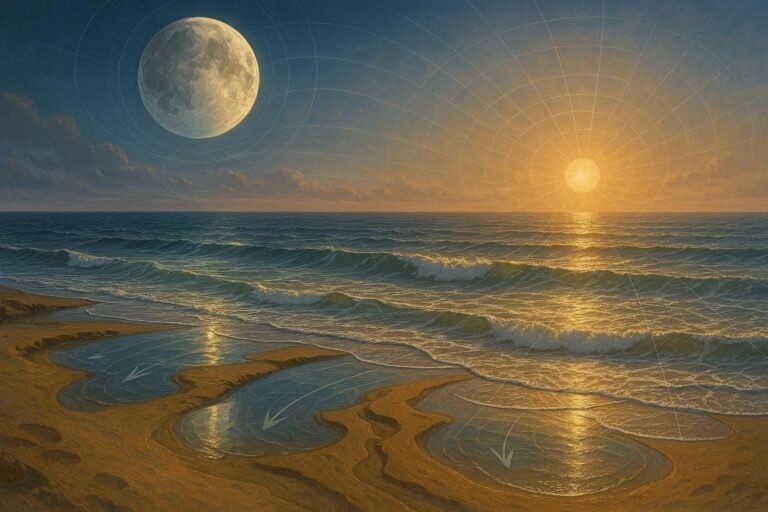
Few natural phenomena shape Earth’s coastlines as consistently—or as dramatically—as the tides. Every day, billions of gallons of seawater advance and retreat across beaches, estuaries, and rocky shores, driven by forces that originate hundreds of thousands of miles away. For…
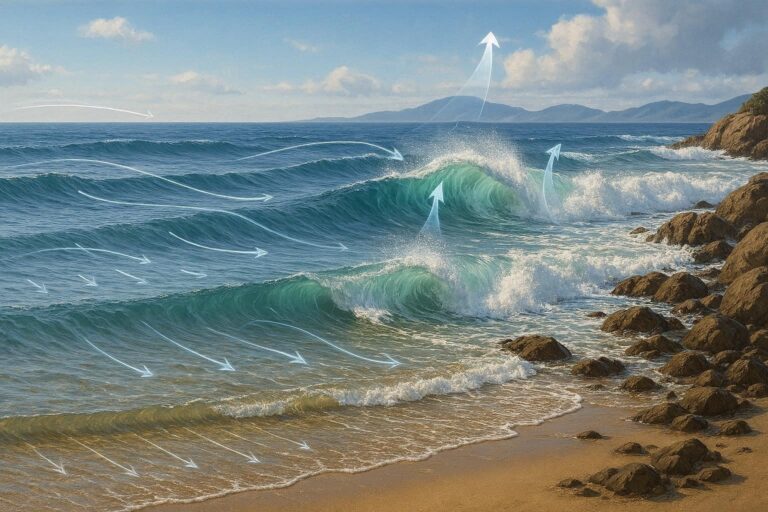
Ocean waves are generated primarily by wind transferring energy to the water’s surface, though seismic activity, gravitational forces, and vessel movement also create distinct wave types. Each wave type follows predictable physical principles—from formation in open water to the dramatic…