Category GEOLOGY

Igneous Rocks: How Volcanoes Create New Land
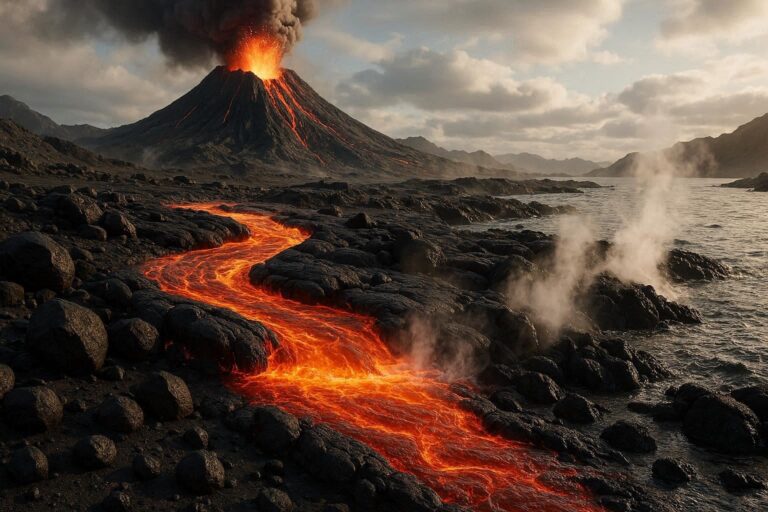
OIG3.90kxahlVyOkNeJltt

Beneath the Earth’s surface lies a restless, molten world. Temperatures exceed 1,300°C in the upper mantle, where rock melts into magma under immense pressure. When that pressure finds a release—through a volcanic eruption or a slow seep through the ocean…
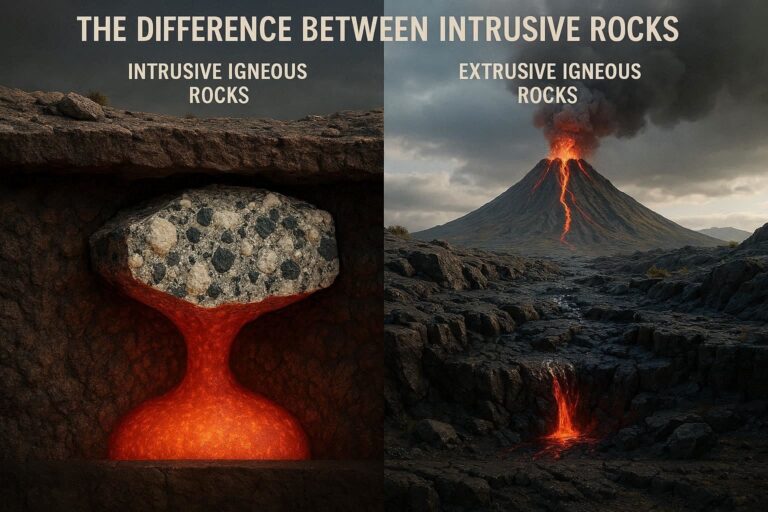
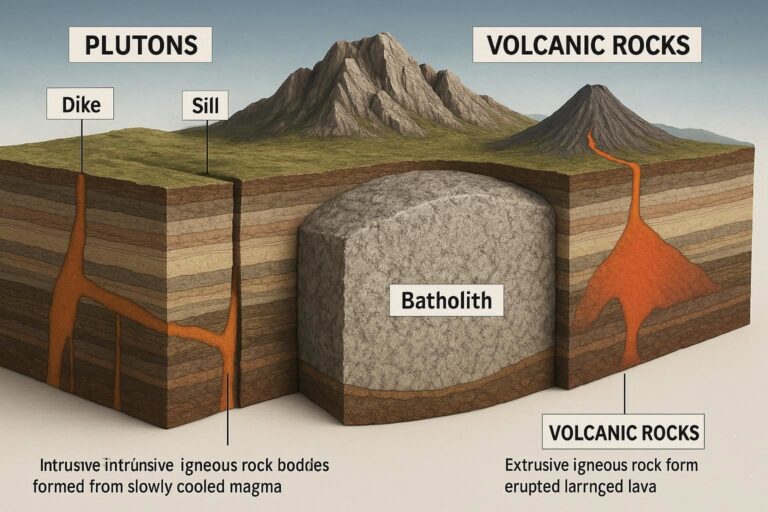
What Are Plutons, Batholiths, and Volcanic Rocks?

OIG3 11zon

Beneath every mountain range, hidden within ancient rock formations, and scattered across volcanic landscapes lies one of Earth’s most fascinating geological stories. The rocks that make up our planet’s crust didn’t appear by chance—they formed through complex processes driven by…

Sedimentary Rocks

OIG2 1 1 1

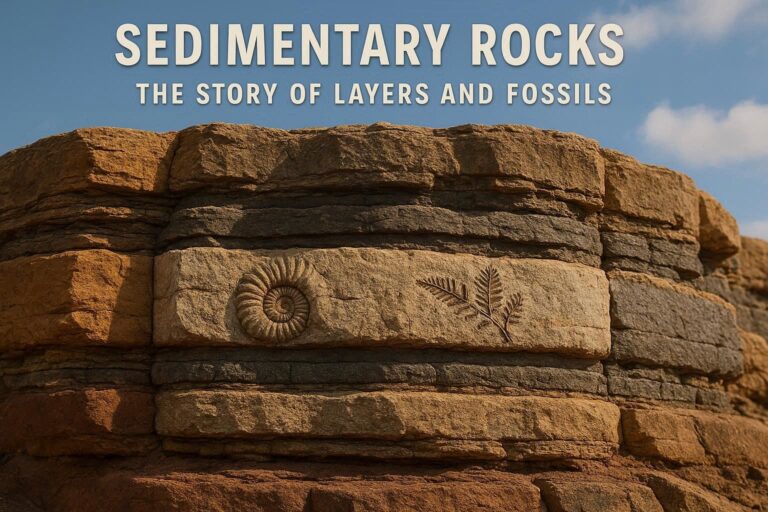
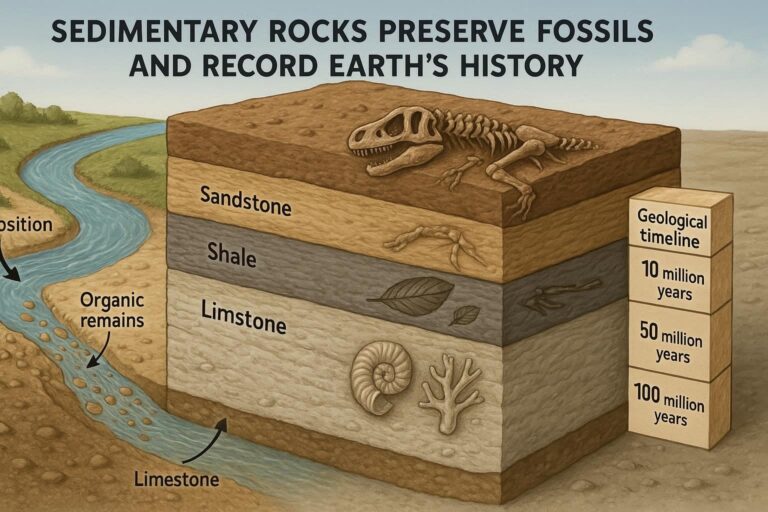
Beneath your feet, etched into canyon walls, and exposed along river banks, sedimentary rocks hold one of Earth’s most detailed historical records. These layered formations have been accumulating for billions of years, quietly documenting the rise and fall of ancient…

How Sediments Become Rock

OIG1.SWPKrF4EjBwL8IcO 11zon

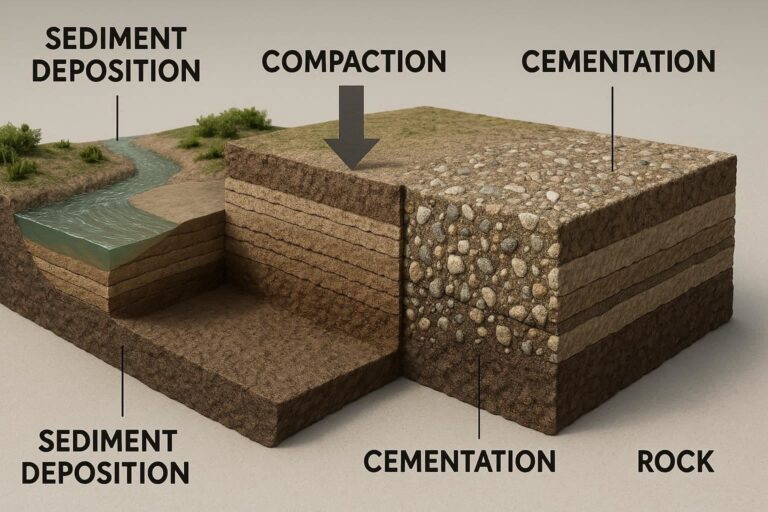
Beneath every mountain range, ocean floor, and river delta lies a story written in stone—one that began not with molten rock or tectonic upheaval, but with something far more ordinary: loose sediment. Sand, silt, clay, and fragments of shell or…

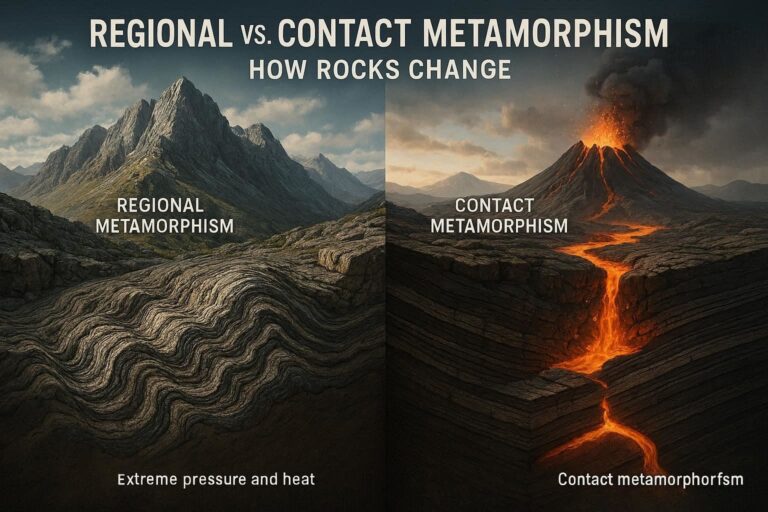
Regional vs. Contact Metamorphism

OIG2 2 6

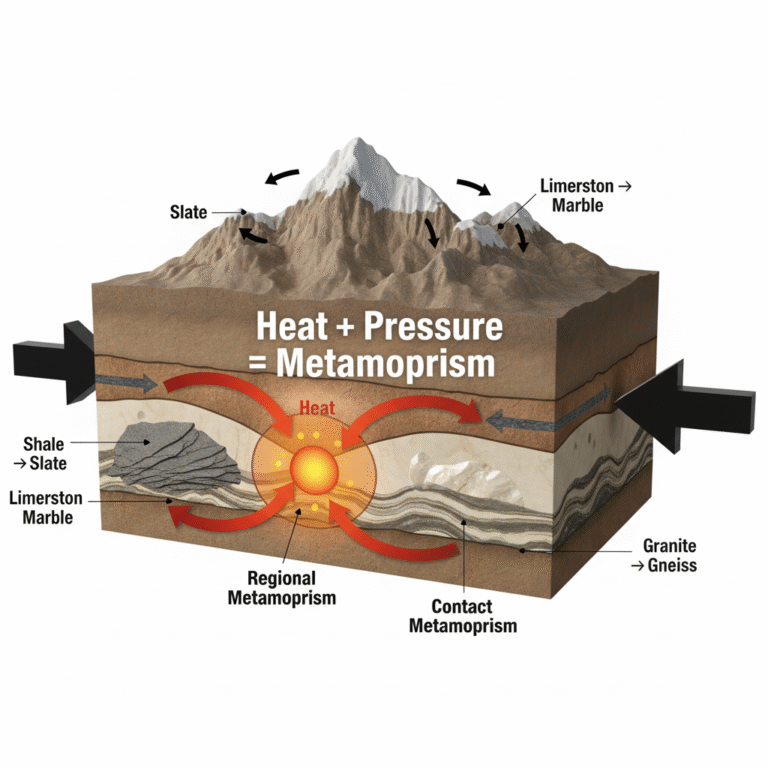
The Earth is never truly still. Beneath the surface, immense forces of heat, pressure, and chemical activity are constantly reshaping the rocks that form our planet’s crust. Metamorphism—the process by which existing rocks transform into new forms without melting—is one…

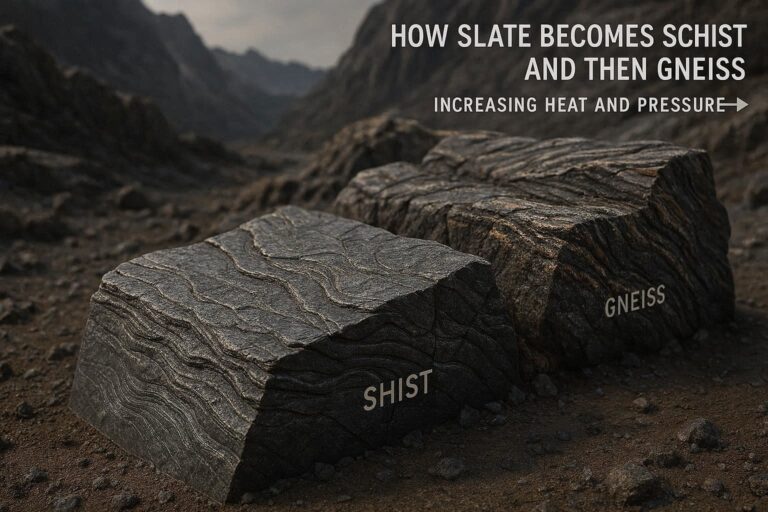
How Slate Becomes Schist and Then Gneiss

OIG4 2 7

Beneath the surface of the Earth, rock is never truly still. Given enough heat, pressure, and time, even the most ordinary stone can be fundamentally transformed into something entirely different. The metamorphic sequence from slate to schist to gneiss is…

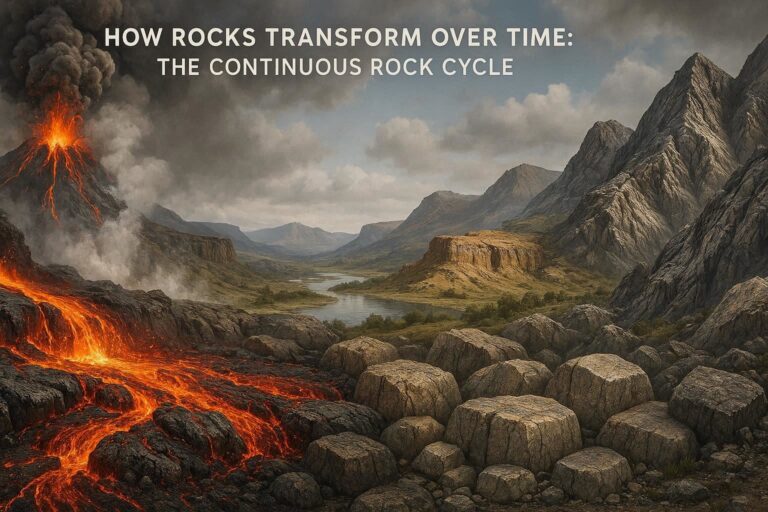
How Rocks Transform Over Time: The Rock Cycle

OIG4 3 1 1

The rock cycle is a continuous geological process through which rocks transform from one type to another—igneous, sedimentary, or metamorphic—driven by heat, pressure, weathering, and tectonic activity. This cycle has shaped Earth’s crust over billions of years and remains active…