

Earth is a restless planet, with its surface forever changing, cracking and eroding. One of the most spectacular effects of the land’s continual geographical reformation are the canyons.
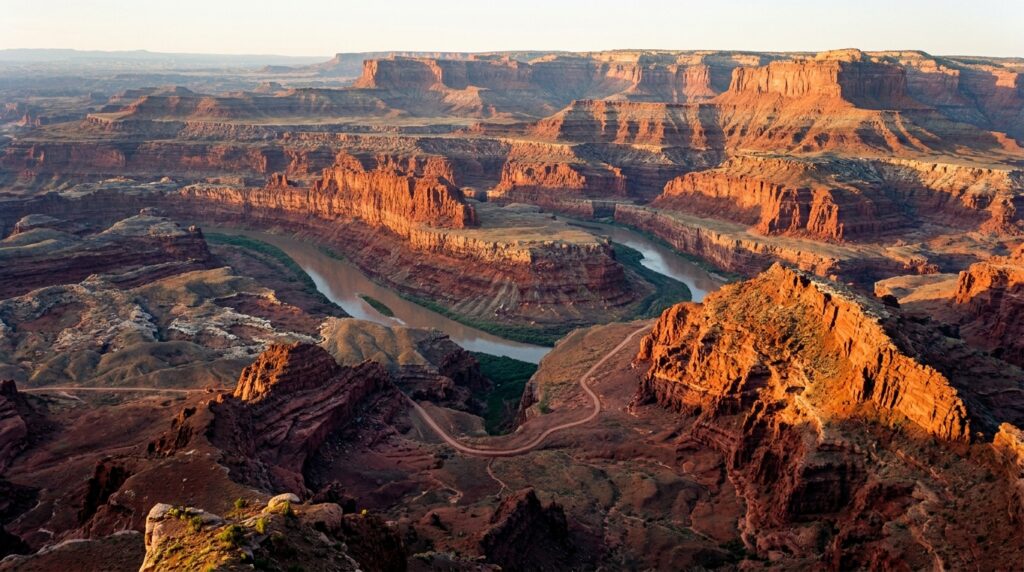
These enormous, deep-cutting valleys with mighty cliffs seem to make us extremely conscious of nature’s huge might and geological forgotten depths.
Canyons are some of the most significant expressions of the Earth’s geology. Actually, the Great Canyon can be considered as open textbooks to the Earth’s ancient past, showing millions of years of history through their rocky outsides. People come from across the world to visit these wonderful sites, such as the Grand Canyon in America.
Though, these giant forms do not come fast. Any understanding about how canyons form must admit of a very complex set of processes. Weathering wears away the solid rock in small chips. Erosion removes those chips. Rushing rivers are the main culprits, carving the earth for hundreds, if not thousands, of years. And finally the ultimate secret: time.
What Is a Canyon?
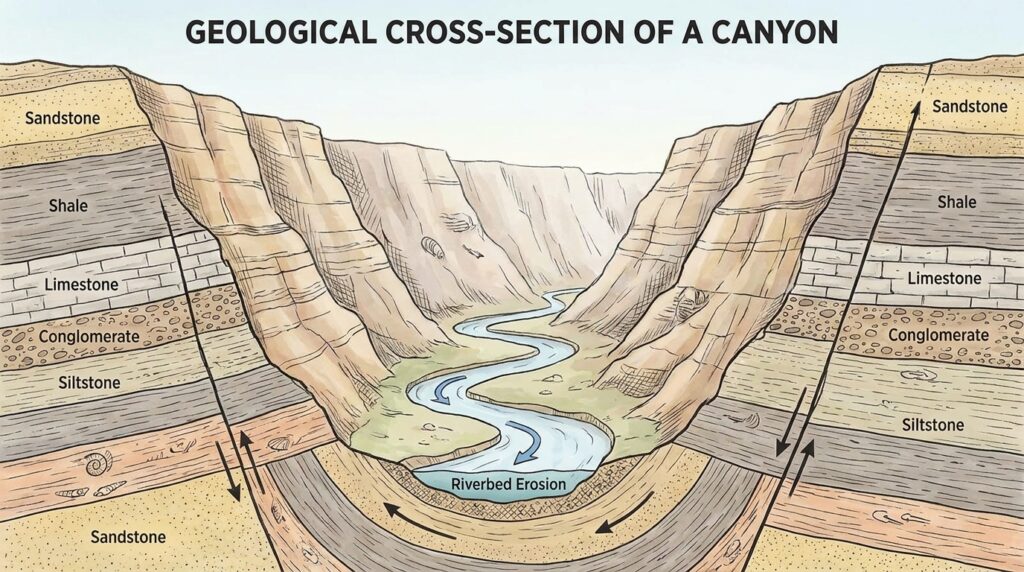 In general, a canyon is a deep V-shaped or U-shaped valley with sides that are straight, steep cliffs. Nearly all of the time, you will see a river, stream, or creek running along the bottom.
Over time, the flowing water vigorously erodes away into the underlying bedrock lowering the surface. The names canyon, gorge and valley are frequently used interchangeably by people but they are in fact quite distinct geologically. In general, a valley is a wider, lower piece of land between a range of hills or mountains, usually with slopes that are not too steep.
A gorge is mainly just a very narrow valley with very steep sides, often thought of as a miniature canyon. A canyon is by far the most spectacular of the three, with a vast size, very deep valleys and very prominent cliff sides. Many canyons exist all over the world.
They are present in the dry deserts of North America to the wetter tropical mountain regions of Asia. Canyons are enough time and excess topography to erode into the earth, large or small.
The Role of Weathering in Canyon Formation
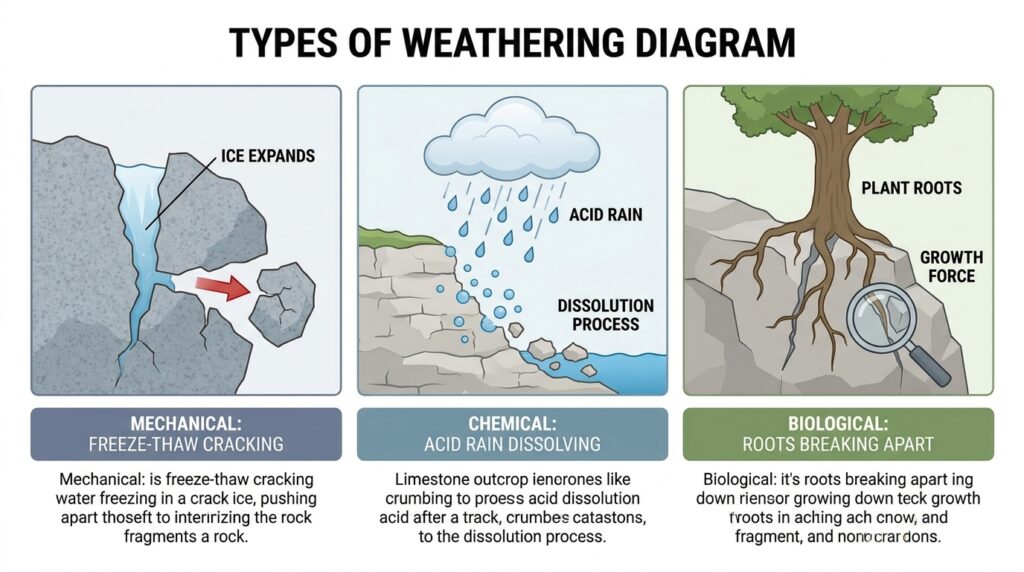
It has to be broken up before a river can erode away rock. This is what weathering does to solid bedrock softening and fracturing it. Mechanical Weathering
Mechanical weathering
It is the physical tearing of rock that does not cause any change in the chemical makeup of the rock. Freeze thaw is a large contributor to mechanical weathering in many canyons. As water enters into tiny fractures in the rock, the extreme changes in temperature at night cause the water to freeze and act as a wedge and break the rock apart.
Such extreme change in temperature can also cause the surface of the rock to slab off as it expands when heated and contracts in the cold. Roots also will cause cracks by starting out in small cracks and getting bigger as the plant grows.
Chemical Weathering
This affects the composition of the rock. As the rainwater falls through the air, it picks up carbon dioxide, forming a weak carbonic acid.
When the rainwater hits the rock, the acid dissolves some minerals in the rock and this works Mainly well with limestone and other softer rocks. After hundreds of years this weakens the walls of the canyon and it collapses or is washed away.
Biological Weathering
Even living organisms break up the rock. Lichens and moss form on the surface, and produce weak acids which dissolve the minerals. Animals burrow into soil and rock, and form looseness. Microorganisms are also involved, breaking down the rock face very slowly.
Erosion: The Main Force Behind Canyon Creation
While weathering prepares the materials, erosion is the physical removal of that rock and soil. It is the active force that hollows out the canyon.
River Erosion

Rivers are the landscapes’ chief sculptors. Moving water is by definition, full of energy. Water flowing in a river has sand, pebbles and even massive rocks suspended in it. This acts as an enormous piece of sandpaper rubbing against the river bed. This is known as abrasion, which grinds the bedrock away. Downcutting is the process where the river is continually cutting down through the earth producing a deep channel.
Wind Erosion
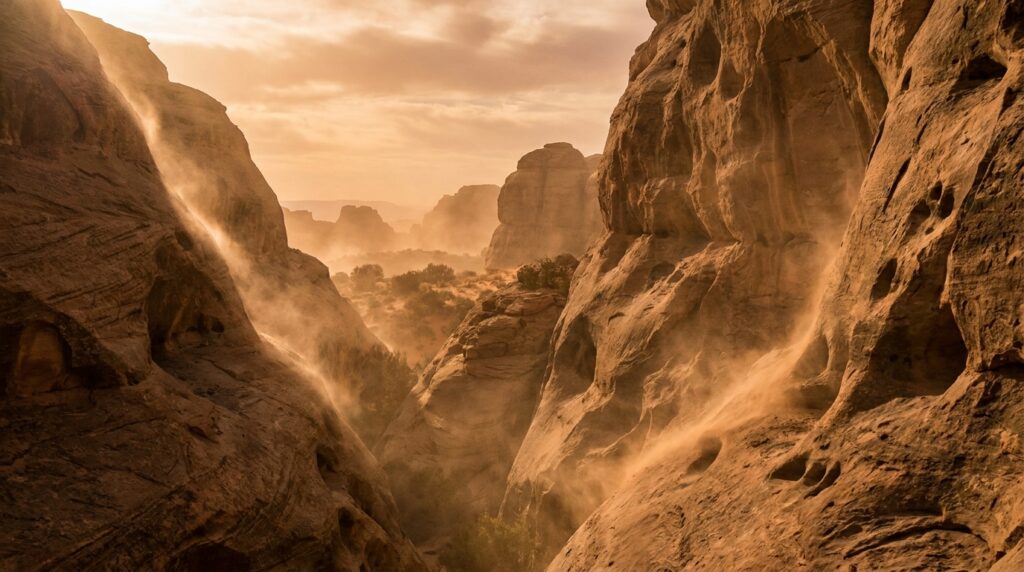
The wind is a significant secondary erosive factor in the dry areas where many historic canyons are found. High winds blow tiny grains of sand across the canyon, abrasively hit the faces of the canyon’s walls and erode away the roughness and edge of the rock, deepening the canyon.
Gravity and Mass Wasting

Gravity is continuously heaving on the fragile rock sides. Weathering and erosional processes can undercut a cliff face, leading to collapses of unsupported rock. Large masses of debris are forced down the canyon sides by events of mass wasting, such as rockfalls or landslides. The river then erodes the debris and transports it away causing the canyon to widen.
Rivers and Their Powerful Influence
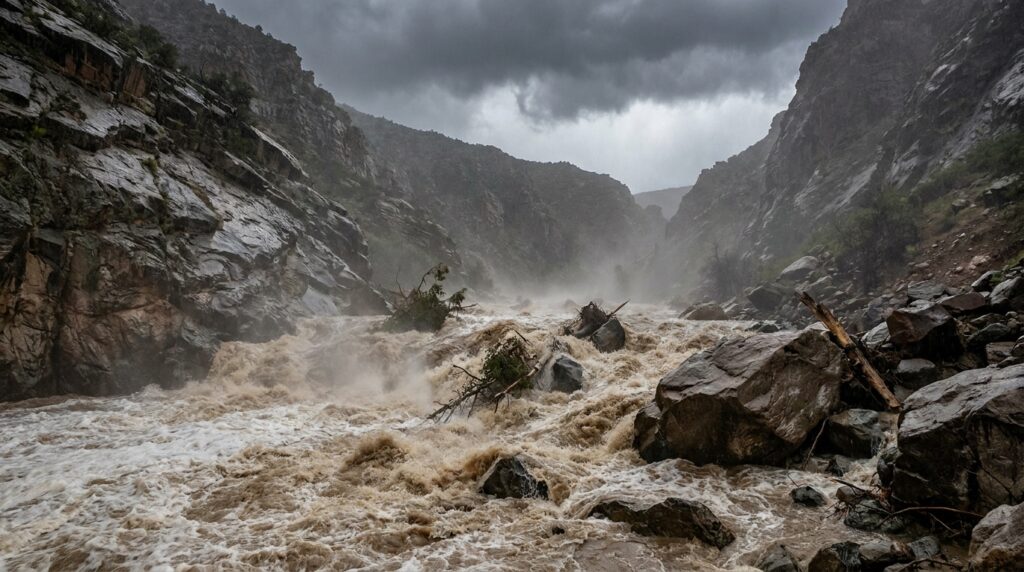
Rivers cannot be left out when explaining its formation, since they are the main driving force of erosion, sculpting the land for millions of years. The erosive ability of a river depends a lot on the water cycle. The flow of a river depends upon the quantity and velocity of water supplied by snow and rainfall. During flood, a huge torrent brings a sudden inflow of water carrying larger material and increasing the erosional ability of the river by orders of magnitude.
A river during floods will do more downcutting in a few weeks than it might under normal condition over a few decades. A few of North America’s most famous canyons were cut through by a specific, mighty river.
The Colorado River is most renowned for having exhaustively cut the Grand Canyon and did so by hauling its rapid descent from the Rocky Mountains and use it to punch through the layers of rock. The Snake River in the Pacific Northwest did the same, forming Hells Canyonthe deepest river gorge in North America.
The Importance of Rock Type
The appearance and structure of a canyon depend heavily on the type of rock being carved.
Hard vs. Soft Rock Layers
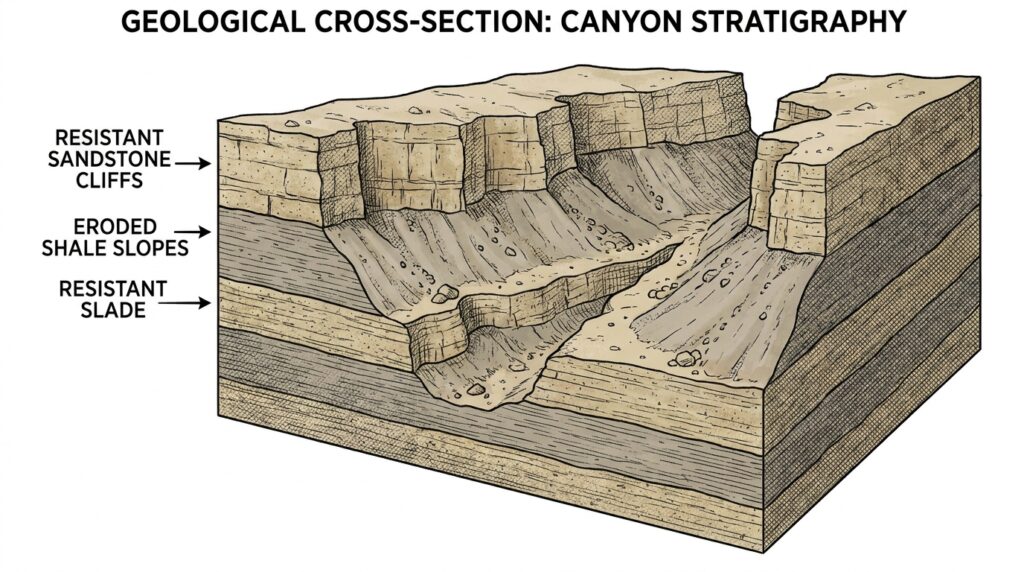
The thing of differential erosion happens when a river erodes through a series of hard and soft rocks. The soft rocks, which erode easily (e.g. shale), tend to cause a gentle slope, whereas the harder rocks (e.g. sandstone or granite) are less easily eroded resulting in steep, almost vertical, cliffs. It is this rapid removal of soft rock that has formed the step-like terraces on the sides of canons.
Sedimentary Rocks in Canyon Landscapes
Sedimentary rock is the most common material that a great canyon will cut into. It was created as sediments including sands, organic remains and mud were laid down over periods of time by the action of the sea, lakes and desert. They are laid down over time in sequential layers and so reveal a record of the whole of Earth’s history in the face of the canyon walls. Scientists can look at these to find of fossil records of ancient life, check climate change through history and find out what conditions were like on Earth before humans were even around.
The Role of Tectonic Activity
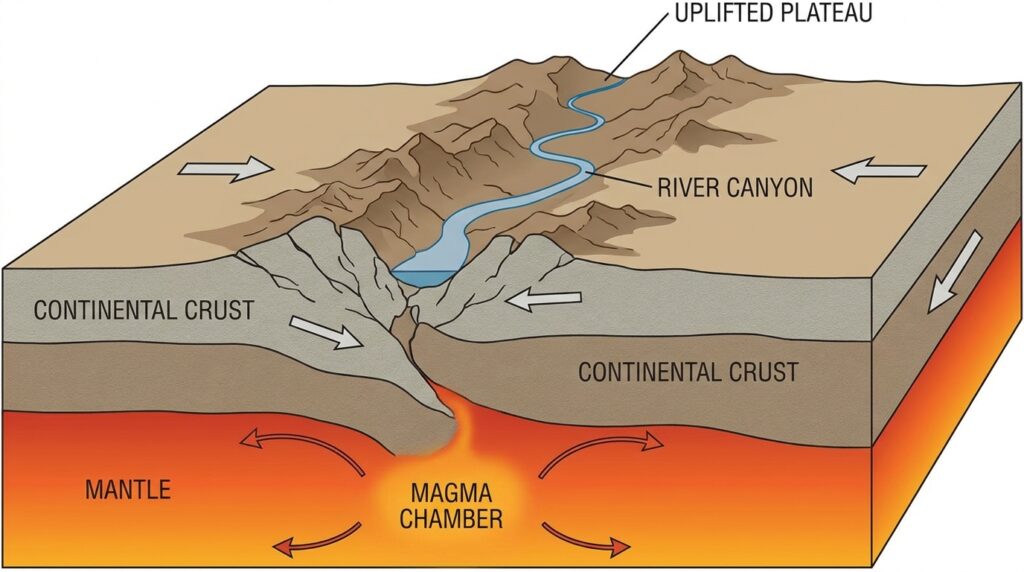
Though, water and rock alone are not enough to form a deep canyon and there must be some other force acting on the land, like tectonic uplift. The Earth’s Crust consists of very large moving pieces called plates.
These plates are continuously moving toward one another and pushing against each other. The land is forced upward when the plates collide forming mountain ranges and plateaus.
When land is uplifted the gradient of the rivers flowing across it increases. The steeper the gradient the faster the river flows and the more energy it has. It is this balance of tectonic uplift and erosion by flowing water that creates the truly deep canyons. While the land pushes up slowly over the centuries, the river slices down just as quickly forming a gigantic and deep canyon.
Time: The Essential Ingredient
Humans measure time by days, years, and decades. The earth I suppose by hundreds of millions years. To actually create a canyon, I have learned this is a long process.
It could take any number of years to erode only an inch or so of bedrock. If you think it takes years to see such a grand feature in a landscape, just imagine how many years it takes to get from the yearly erosion, weathering, and tectonic uplift, to the gigantic canyons visible out in space.
Famous Canyons Around the World
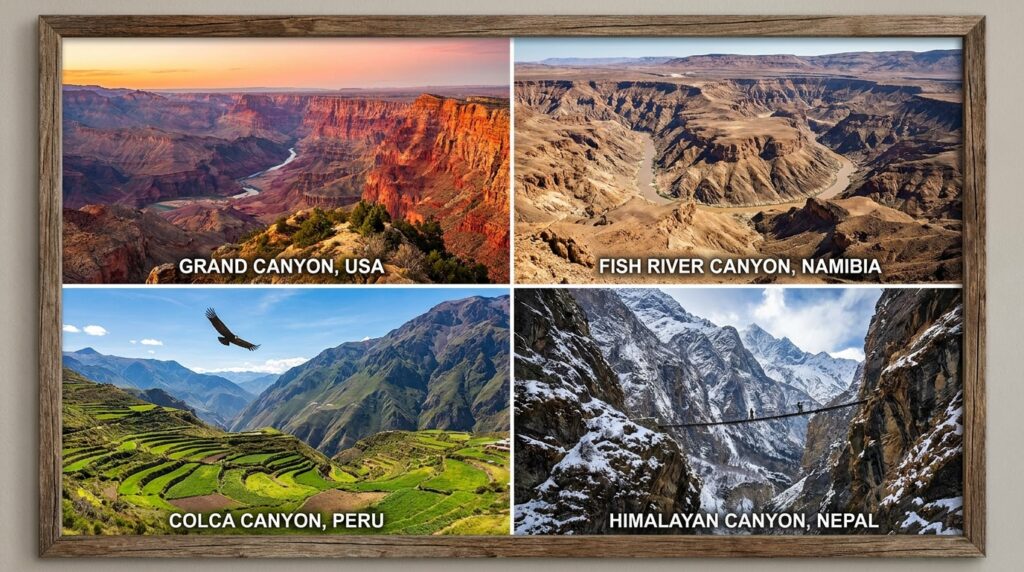
Nature has carved spectacular canyons on nearly every continent. Each offers a unique glimpse into the region’s geological past.
Grand Canyon
The Grand Canyon, which is situated in Arizona, is possibly the most well known canyon in the world. Having been carved out by the Colorado River during the last five to six million years, the canyon measures in excess of a mile deep. The canyon walls consist of exposed sedimentary deposits that offer one of the most complete geological histories on the planet.
Fish River Canyon
The Fish River Canyon is the biggest canyon in Africa, located in Namibia. It is 100 miles long and is heavily affected by the dry, hot desert climate. It was created by water erosion combined with the collapse of the valley floor, caused by the movement of the earth’s tectonic plates hundreds of million years ago.
Colca Canyon
The Colca Canyon in Peru is double the depth of the Grand Canyon. Not only is it mind-blowingly deep, but has real cultural depth as well. Communities have farmed the sloping terraces of the canyon for centuries, combining human history with spectacular geology.
Yarlung Tsangpo Grand Canyon
Yarlung Tsangpo Grand Canyon, hidden in Tibet, reportedly is the deepest valley in the world. It is cut by the Yarlung Tsangpo as he thunders down from the Himalayas, with jagged rock formations and the world’s most pristine extreme ecosystems.
How Scientists Study Canyon Formation
Various tools are used by geologists to determine the processes and timings of canyon formation. Geological mapping involves plotting the variations in the types of rocks, fault positions, and rock types to understand the structural history of an area. Methods of rock dating (like radiometric dating) enable researchers to determine the exact time the rocks were laid down, and when the river cut through those layers.
Currently, technology is crucial. Satellites or even drones produce high resolution maps of areas without access in the canyon. In addition, fossils within the sediments help to provide environments from the ages, from which climate change and evolution trends can be observed.
Environmental and Human Importance of Canyons
Canyons are much more than beautiful scenery; they play a vital role in local ecologies and human societies.
Ecosystems and Biodiversity
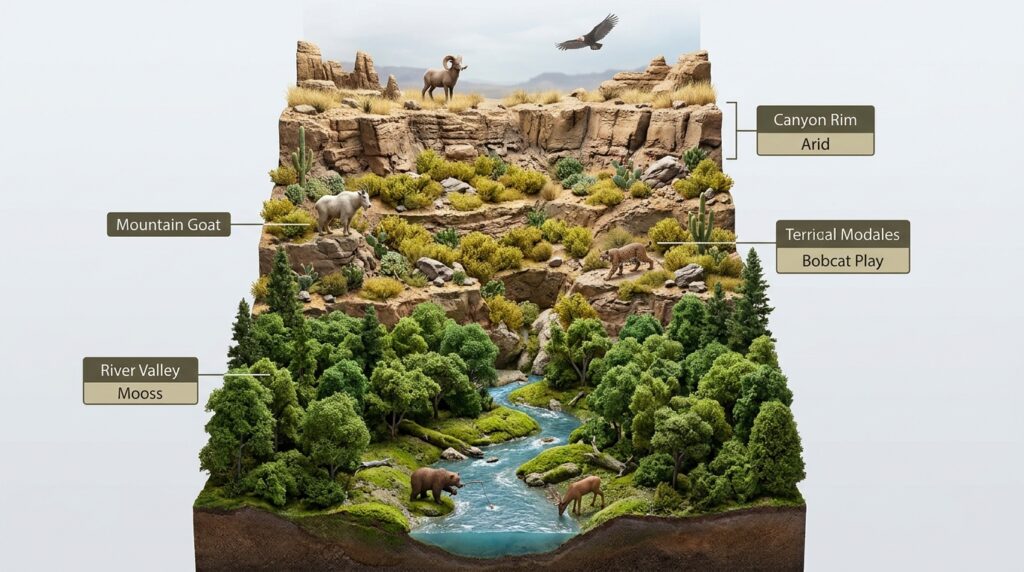
The large elevation differences in a canyon allow for many microclimates. Down at the river, the bottom of the canyon is the size of a rainforest, a damp, lush oasis. Far above, the rim of the canyon, thousands of feet away, is a desert or frozen alpine desert, completely different. This wide range of microclimates then supports a large variety of plants and animals, many of which are specialized and no place else.
Tourism and Recreation
Canyons attract visitors in the millions each year. They offer world class recreation from whitewater rafting to rock climbing to hiking and photography. The dollars brought into local economies by tourism also promote greater appreciation of nature.
Cultural and Historical Significance
People have used canyons as homes, fortresses, and sacred sites for thousands of years. Ancient peoples have a long history of connection to canyons. Look to the ancient cliff dwellings across the canyons of the American Southwest to see how people once made a home in these wild places.
Threats to Canyon Landscapes
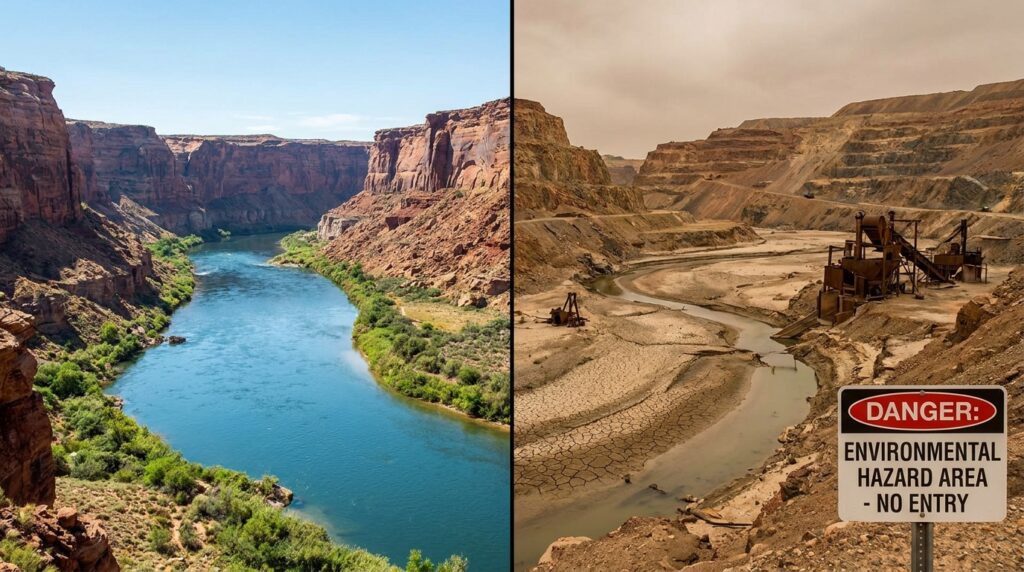
Even though they have existed in their present form for a great number of years, canyons are threatened by present influences which may in time change the face of the not yet – A lot. Climate change is altering the pattern of rainfall.
More frequent and lengthy droughts lead to decreased river flow, contributing to accelerated natural erosion and impacting on riverine fauna and flora. Hard to predict short-term but intense weather events lead to massive flooding and abnormal rates of erosion.
Human impact is also influential. Mining operations in canyons can pollute the rivers and damage the fragile ecosystem. The building of huge dams to control the river flow prevents the natural cycles of flooding and deposit of sediments that sustain the canyons. And, over commercialized tourism can destroy the natural beauty and ecological balance of the waterways.
Preserving the Masterpieces of Time
A canyon is an example of the power of natural forces. Weathering dissembles the earth, erosion deposits the material, rivers work as the carving tools and the tectonic uplift offers the mechanism. They do all of this in the uncaring feeling of deep, geological time. Canyons are a reminder that our planet’s surface is never still.
The very ground we walk on is in a perpetual state of flux, shaped by forces whose effets are even older than most of us. Learning what makes these great canyons can now show us how precious they are.
To protect them, it is necessary to the conscious conservation of these environments, the practice of sustainable tourism and the respect for the natural forces that have created then. If we take care of these geological wonders, future generations will be able to be at the edge of a canyon and experiencing the same thrill that we experience the first time we are there.