

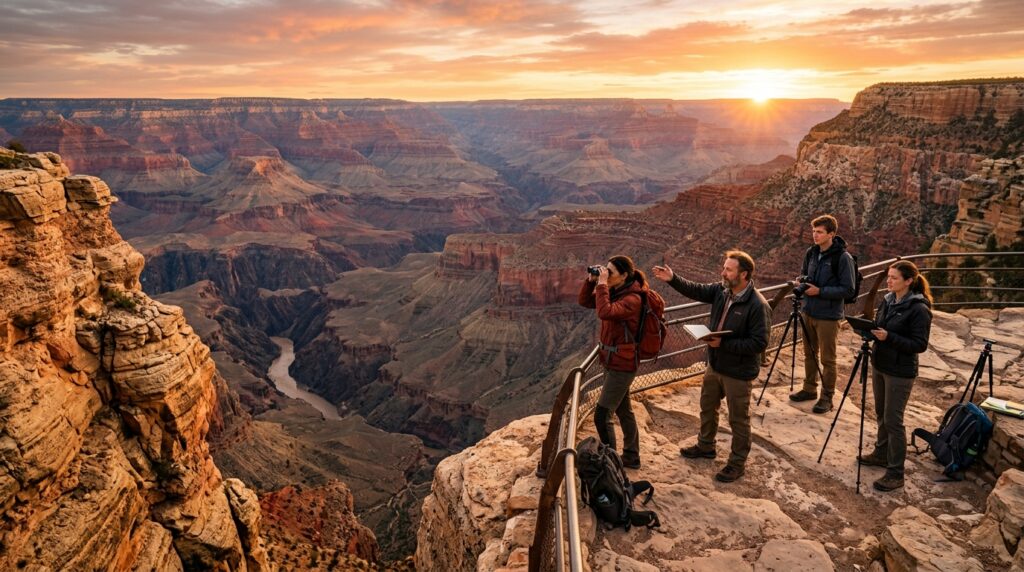
Earth hides its history incredibly well. Over billions of years, oceans have advanced and retreated, mountains have risen and crumbled, and countless species have appeared and vanished. Most of the evidence for these monumental changes lies buried deep beneath our feet, locked away beneath layers of soil, vegetation, and modern infrastructure. To study this history, scientists usually have to drill deep into the crust or rely on complex imaging equipment.
However, nature occasionally does the heavy lifting for us. Through the slow, relentless power of erosion, rivers and tectonic forces slice open the Earth’s crust, revealing towering walls of rock. These geological marvels—canyons—serve as vast, open books of natural history. They offer a rare, unobstructed view into the deep past, allowing scientists to walk through millions of years of time simply by hiking down a trail.
Geologists view these massive chasms as invaluable natural laboratories. Instead of studying small, isolated core samples pulled from a drill hole, researchers can examine miles of continuous rock formations. The Grand Canyon in the United States is perhaps the most famous example of this phenomenon, but canyons all over the world provide similar opportunities. By studying these natural cross-sections, we can unlock the secrets of how our planet formed, how its climate has shifted, and how life has evolved over eons.
Why Canyons Are Called Natural Laboratories
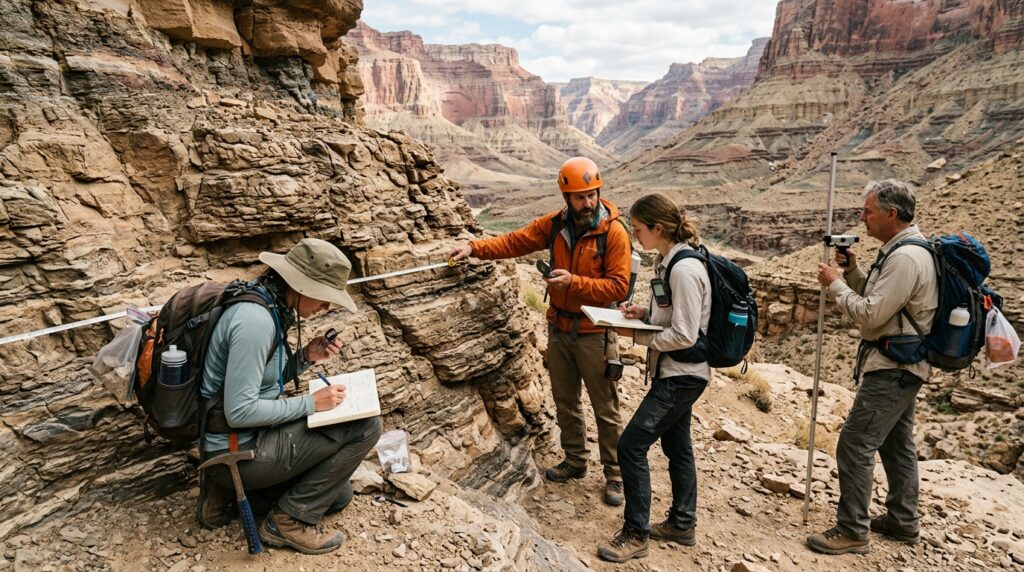
In a traditional scientific laboratory, researchers carefully control variables to observe specific outcomes. In geology, the entire Earth is the laboratory, but it can be notoriously difficult to access. Canyons solve this problem by providing continuous exposure of rock layers without the need for human excavation.
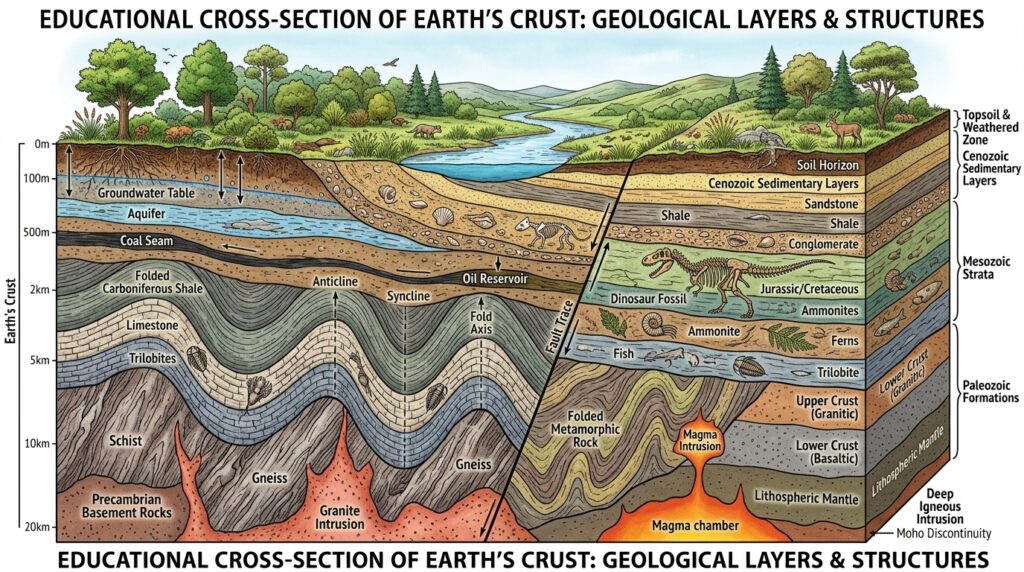
This exposure gives scientists a clear visual record of geological time. When you stand at the rim of a massive canyon and look down, you are essentially looking backward through history. The deeper you go, the older the rocks become. This allows for incredibly easy access to study sediment, fossils, and geological structures.
Instead of guessing what lies beneath the surface based on sparse data, geologists can physically touch natural cross-sections of the Earth’s crust. They can measure the exact thickness of ancient ocean beds, observe the ash fallout from prehistoric volcanic eruptions, and track the slow movement of tectonic plates—all preserved in stone.
Rock Layers: A Timeline of Earth’s History
The walls of a canyon are striped with different colors and textures. These stripes represent distinct rock layers, and they form the foundation of geological research.
Stratigraphy in Canyons
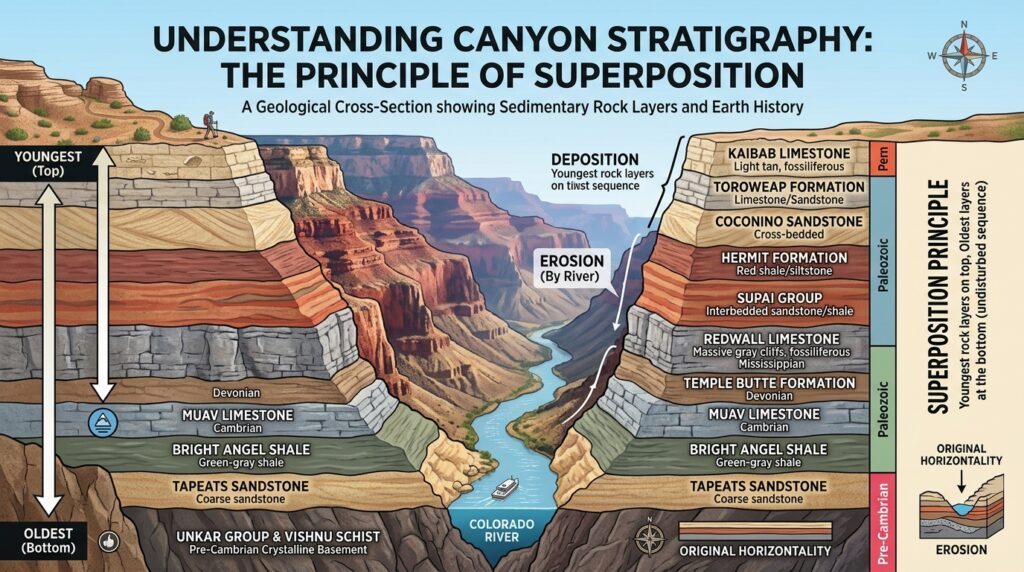
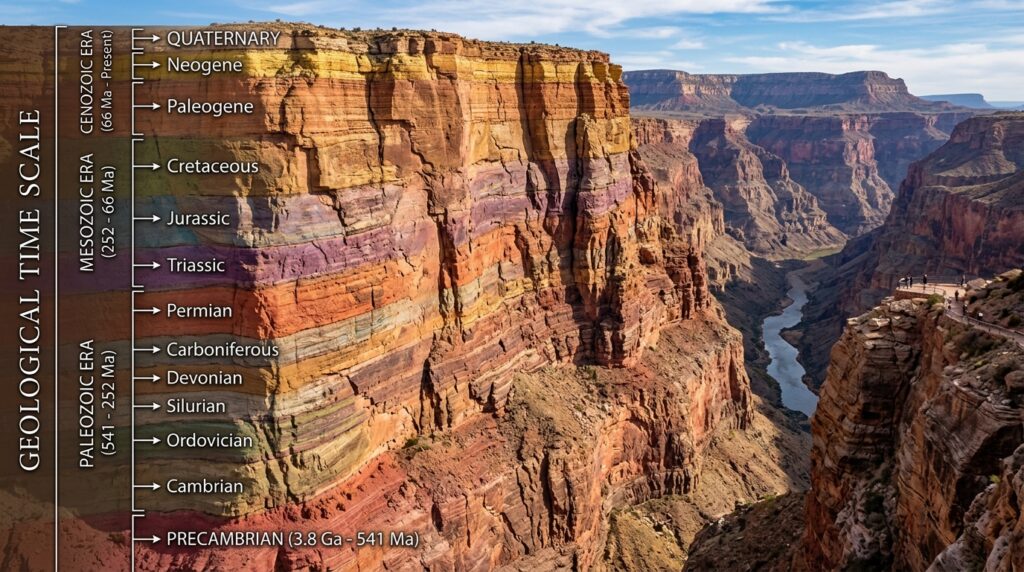
Stratigraphy is the study of rock layers, or strata. In canyon environments, you can clearly see how layers of sediment have stacked up over millions of years. This relies on the principle of superposition, a foundational concept in geology stating that in an undisturbed sequence of rocks, the older layers are at the bottom and the younger layers are at the top. By mapping these layers, scientists can build a chronological timeline of a specific region.
What Rock Layers Reveal
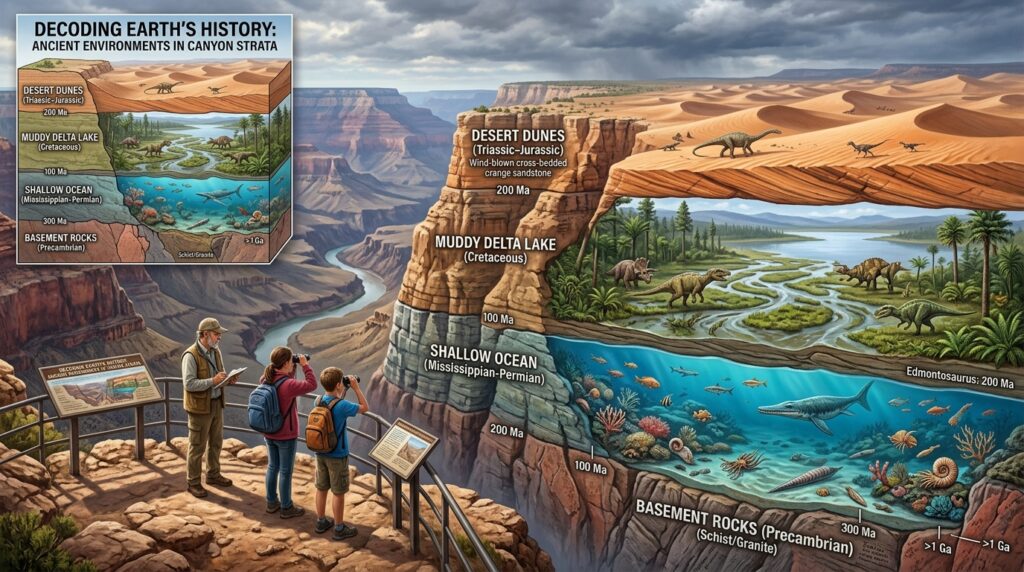
Each layer of rock tells a unique story about the environment at the time it was formed. A thick band of limestone usually indicates that the area was once covered by a warm, shallow ocean. A layer of sandstone might suggest a vast, ancient desert filled with shifting sand dunes. Dark shale often points to the existence of a muddy river delta or a deep, stagnant lake.
These layers also track climate changes over time. By analyzing the chemical composition of the rocks, scientists can determine ancient temperatures, carbon dioxide levels, and precipitation patterns. Furthermore, rock layers record past volcanic and tectonic activity. A sudden layer of igneous rock or volcanic ash indicates an eruption, while warped or folded layers show where tectonic plates once collided.
Fossils as Evidence
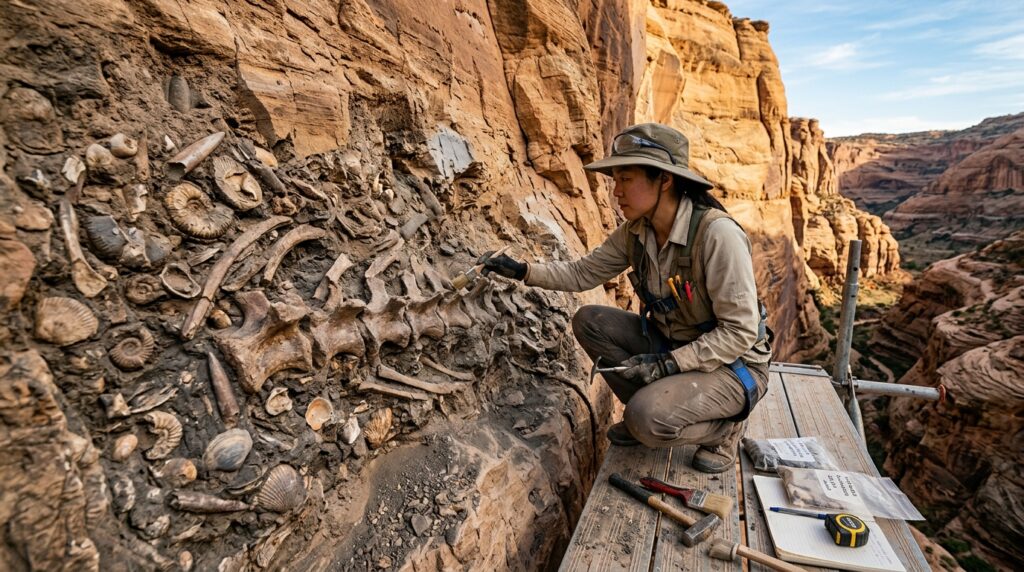
As sediment accumulated in ancient environments, it often buried the remains of plants and animals. Over millions of years, these remains were preserved as fossils. Canyons expose these fossils, providing concrete evidence of ancient life.
By studying these fossils, paleontologists can track evolutionary changes recorded in the rock. They can see how species adapted to changing climates or went extinct during global catastrophes. Certain widespread and short-lived species, known as index fossils, are particularly useful. When geologists find an index fossil in a specific canyon layer, they can instantly determine the approximate age of that rock.
Canyons as Windows into Deep Time
To understand canyons, you must grasp the concept of geological time. Human history is measured in centuries and millennia, but geological time operates on a scale of millions to billions of years. Deep time is a concept that challenges human comprehension, but canyons make it visible.
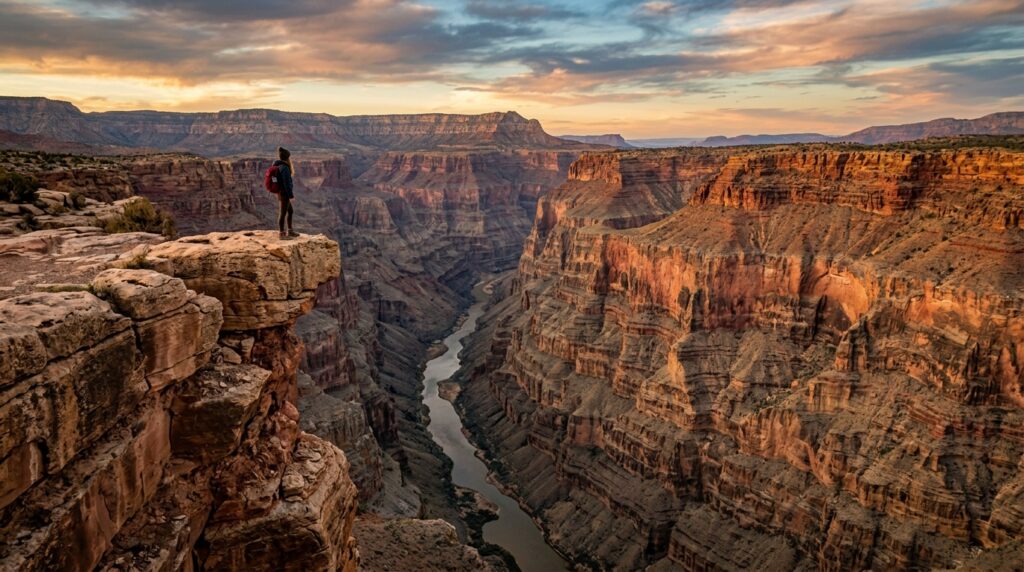
Erosion acts as a time machine. As rivers and wind remove “younger” surface material, they expose ancient Earth layers that were once buried miles underground. A single cliff face might represent 500 million years of history. Standing in a canyon allows you to physically bridge the gap between the modern world at the rim and the ancient, unrecognizable Earth at the bottom.
Erosion as a Geological Tool
Canyons do not form overnight. They are the result of persistent, powerful erosional forces working over unimaginable spans of time.
River Incision
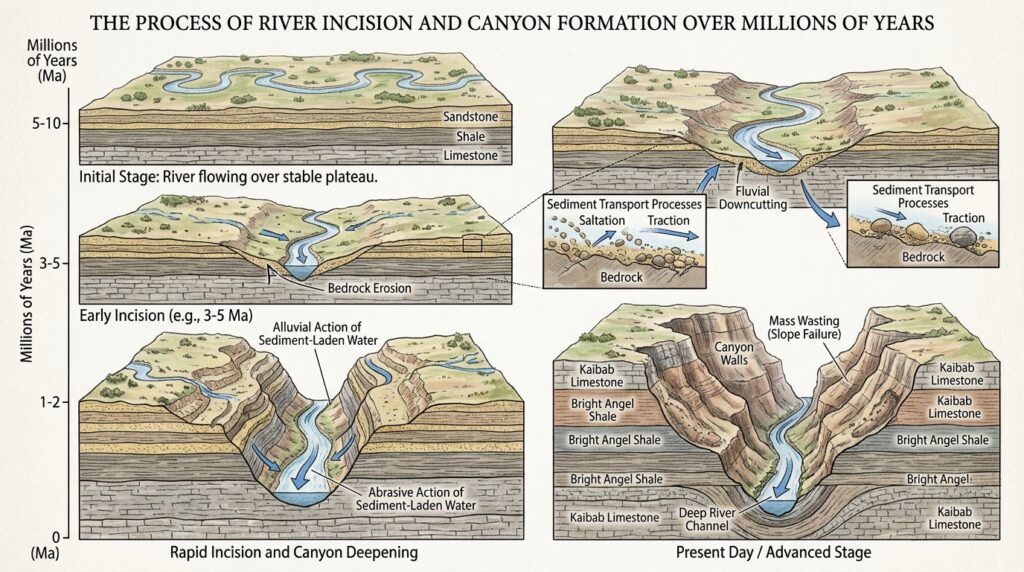
The primary architect of most canyons is water. River incision occurs when a flowing body of water cuts downward into the underlying bedrock. As the land slowly rises due to tectonic forces, the river acts like a saw, continuously deepening the channel. Over millions of years, a shallow riverbed can transform into a mile-deep gorge.
Weathering Processes
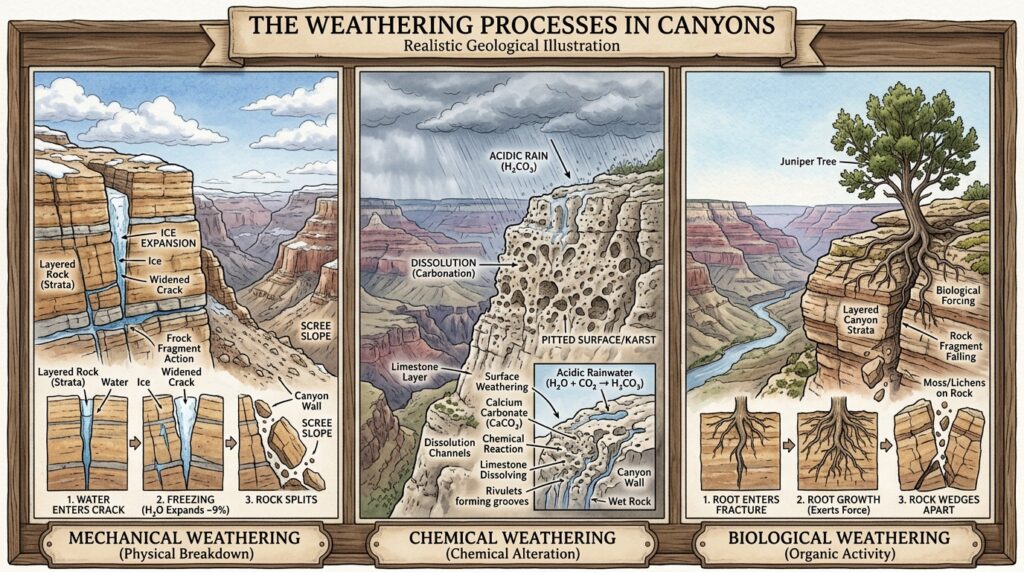
While rivers cut downward, weathering processes widen the canyon walls. Mechanical weathering breaks rocks apart through physical forces, such as water freezing and expanding inside cracks. Chemical weathering alters the minerals within the rock; for example, slightly acidic rain can dissolve limestone over time. Biological activity, such as tree roots growing into crevices, also weakens rock structures, causing them to crumble.
Mass Wasting
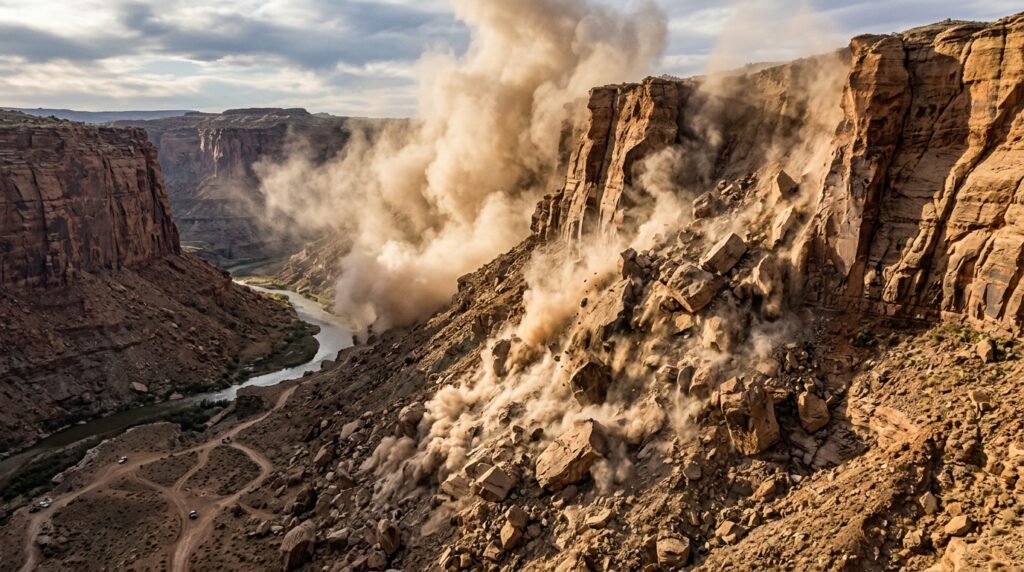
Gravity constantly pulls at the weakened canyon walls. Mass wasting refers to the large-scale movement of rock and soil down a slope. Rockfalls and landslides frequently occur in steep canyons, stripping away outer material and exposing fresh surfaces for scientists to study.
Rivers That Reveal Earth’s History
Rivers act as natural cutting tools, slicing through the geological record. They also play a crucial role in sediment transport and deposition cycles, carrying away the debris to eventually form new rock layers elsewhere.
The Colorado River is arguably the most famous geological tool on the planet. Over the past five to six million years, it has carved through the layered rock formations of the Colorado Plateau, creating the Grand Canyon.

Similarly, the Green River in Utah has exposed massive sedimentary basins, revealing detailed records of ancient lakes and the incredible fossils of fish and plants that lived in them.
What Scientists Study in Canyon Environments
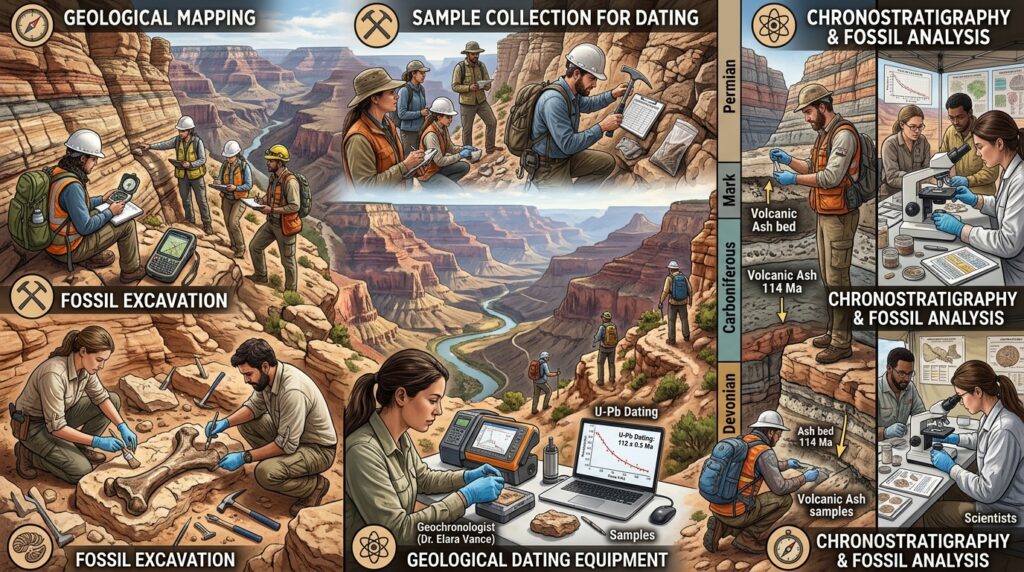
Because canyons offer such diverse geological features, they attract researchers from multiple scientific disciplines.
Stratigraphy
Stratigraphers spend their time mapping and comparing rock layers. By noting the thickness, composition, and sequence of strata, they can correlate rock formations across vast distances, piecing together a regional history of the Earth.
Paleontology
Paleontologists scour canyon walls for fossils. These environments are incredibly rich in fossilized remains, ranging from microscopic marine organisms to the massive bones of dinosaurs. These discoveries help reconstruct the tree of life and understand past ecosystems.
Geochronology
Geochronologists focus on determining the exact age of rocks. They use techniques like radiometric dating, which measures the decay of radioactive isotopes within specific minerals. Canyons provide access to volcanic ash layers that are perfect for this type of dating, allowing scientists to put absolute numbers on the geological timeline.
Structural Geology
Structural geologists look at how the Earth’s crust has moved and deformed. They study faults, folds, and fractures visible in the canyon walls. This helps them understand the tectonic forces that shaped the landscape, including mountain building and earthquakes.
Famous Canyon “Laboratories” Around the World
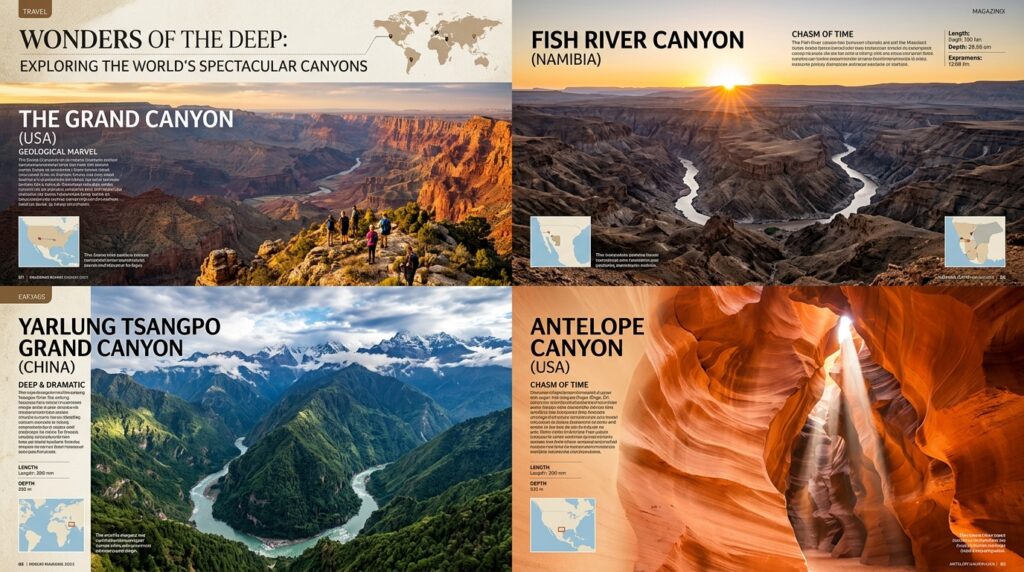
While the American Southwest is famous for its canyons, extraordinary natural laboratories exist all over the globe.
Grand Canyon
The Grand Canyon in Arizona is one of the most studied geological sites on Earth. It offers a nearly complete record of Earth’s crustal history, with the rocks at the bottom dating back nearly two billion years. It is the gold standard for geological education and research.
Fish River Canyon
Located in Namibia, Fish River Canyon is the largest canyon in Africa. It exposes ancient basement rocks that are over a billion years old, as well as younger sedimentary layers. It provides vital clues about the breakup of the supercontinent Gondwana.
Yarlung Tsangpo Grand Canyon
Hidden in the Himalayas, the Yarlung Tsangpo Grand Canyon is one of the deepest and longest canyons in the world. Its extreme depth reveals the intense interaction between tectonic uplift (the collision of the Indian and Eurasian plates) and massive river incision.
Technologies Used to Study Canyons
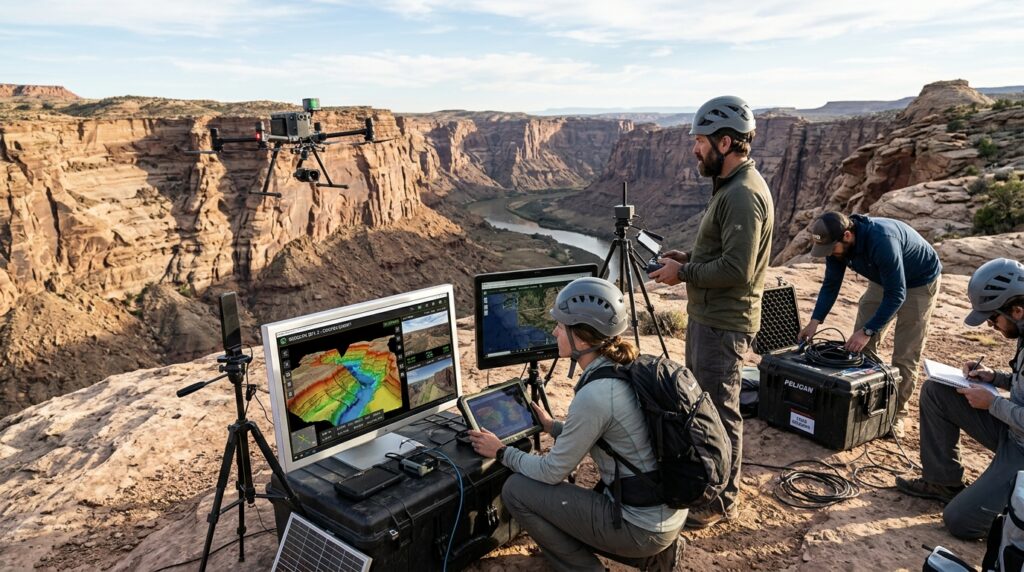
While hiking with a rock hammer remains a staple of geological field work, modern technology has revolutionized canyon research.
Scientists now use satellite imagery and aerial drones to map rugged, inaccessible terrain safely and quickly. 3D geological mapping software allows researchers to create highly accurate digital models of canyon systems, making it easier to visualize complex structures. Ground-penetrating radar can “see” beneath the surface debris, revealing hidden faults or buried river channels. Furthermore, advanced isotope and radiometric analysis conducted in high-tech laboratories can date rock samples with unprecedented precision.
Human and Scientific Importance
Studying canyons is not just an academic exercise. The knowledge gained from these natural laboratories has profound implications for our modern world.
Understanding Earth’s Evolution
Canyons provide the hard data needed to understand plate tectonics, mountain building, and the general evolution of the Earth. By reconstructing climate history from canyon rocks, scientists can also build better models to predict how our current climate might change in the future.
Resource Exploration
The rock layers exposed in canyons often contain valuable resources. Geologists study these formations to locate essential minerals, map vital groundwater aquifers, and identify deposits of fossil fuels. Understanding the geology of a canyon helps resource managers make informed, sustainable extraction decisions.
Education and Field Research
Canyons serve as spectacular outdoor geology classrooms. They provide hands-on training for future geoscientists. Seeing a textbook concept perfectly preserved in a towering cliff face inspires students and helps translate abstract theories into tangible reality.
Challenges in Canyon Research
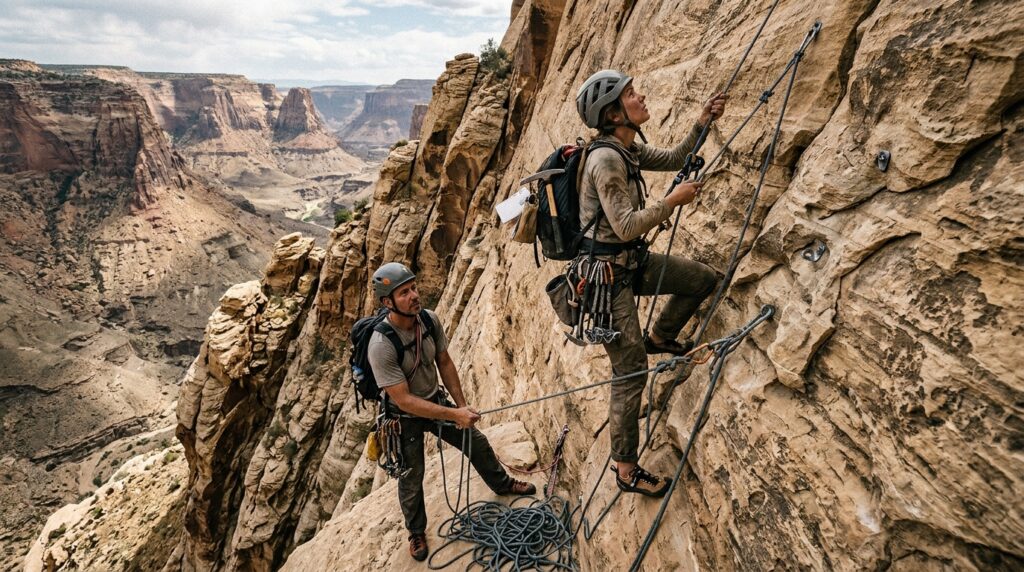
Despite their scientific value, canyons present significant challenges for researchers.
The most obvious hurdle is the difficult terrain. Accessing specific rock layers often involves dangerous rock climbing, traversing steep scree slopes, or navigating treacherous whitewater rapids. Furthermore, the very erosion that exposes these rocks is constantly destroying them. Heavy rains can wash away delicate fossils before they can be excavated.
Climate impacts also threaten preservation, as changing weather patterns can accelerate erosion or alter river flows. Finally, human disturbance and development, including dam construction, mining, and heavy tourism, can permanently damage these fragile geological archives.
Protecting the Archives of the Earth
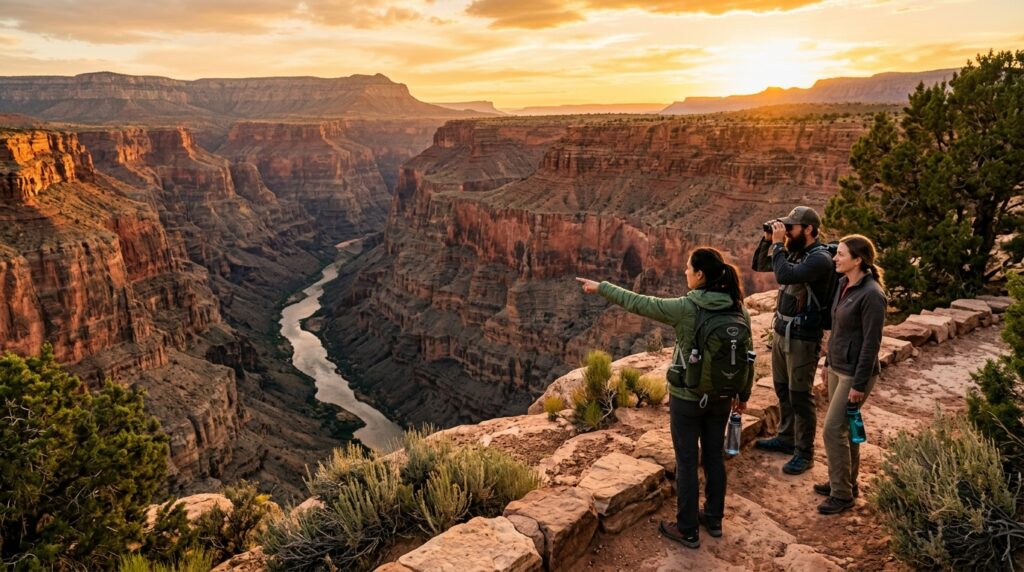
Canyons serve as vital, natural geological archives. They strip away the obscuring soil and vegetation to reveal Earth’s deep history through clearly visible layers. From tracking ancient climate shifts to tracing the evolutionary path of prehistoric life, ongoing research in these environments continues to uncover new insights about our world.
As we face modern environmental challenges, the lessons locked in canyon walls become increasingly relevant. They remind us that the Earth is a dynamic, ever-changing system. By preserving and studying these essential living laboratories, we ensure that we can continue to read the story of our planet for generations to come.