Category LANDFORMS OF OCEANS

Atolls in the Pacific Ocean
OIG4 4 10

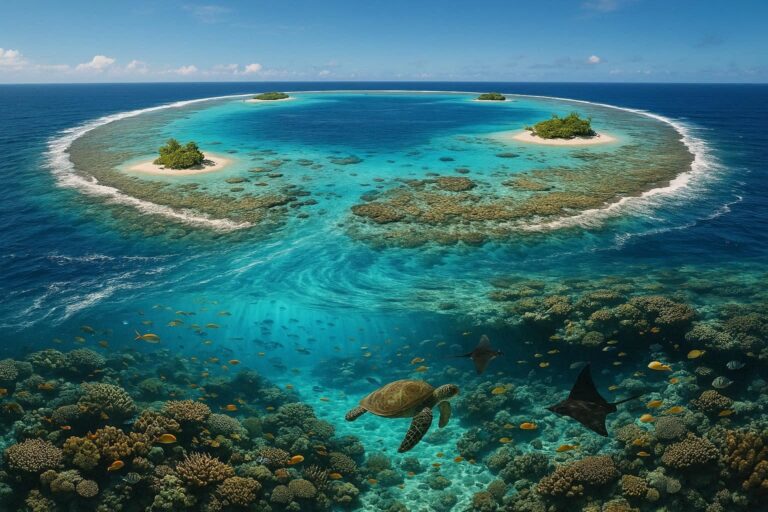
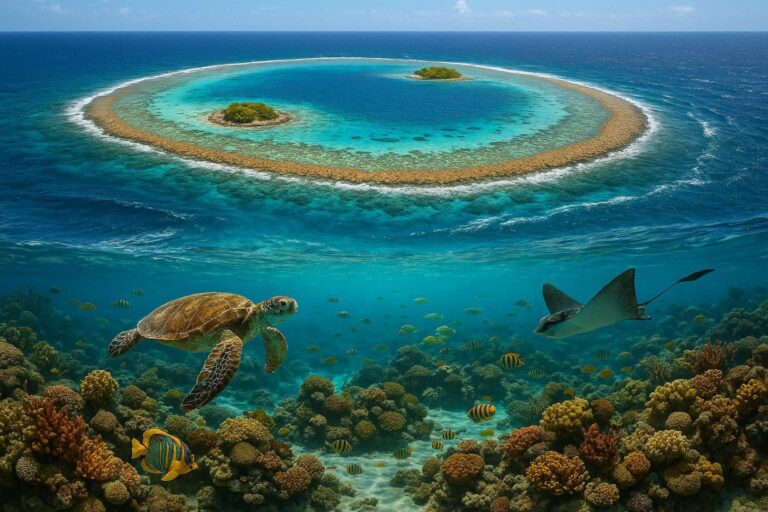
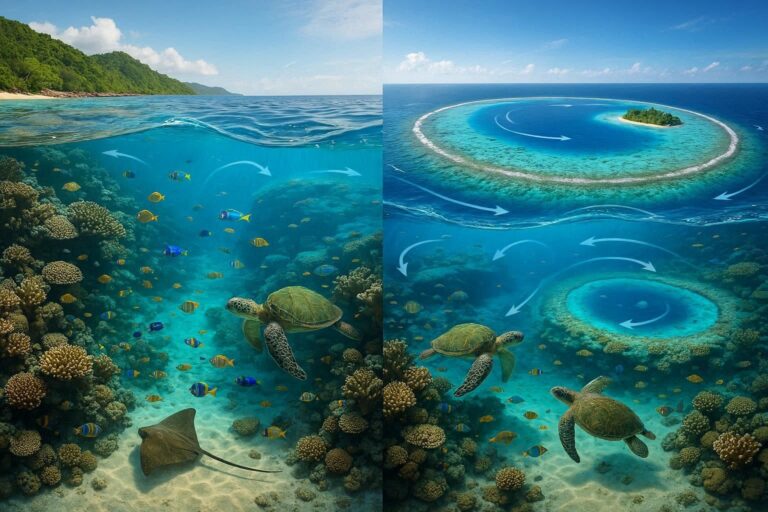
Pacific atolls are ring-shaped coral reef systems enclosing shallow lagoons, formed over millions of years through volcanic subsidence and coral growth. Home to extraordinary biodiversity and millions of people, these fragile ecosystems now face existential threats from rising sea levels…
Ecological Importance of Atolls

OIG2 3 24

Scattered across the tropical oceans like emerald rings on blue canvas, atolls represent some of the most ecologically significant yet least understood ecosystems on Earth. These circular coral formations—often no more than a few meters above sea level—support extraordinary concentrations…

Coral Reefs and Atolls

OIG3.LkJk

Coral reefs are diverse underwater ecosystems built by living coral organisms, while atolls are ring-shaped reef structures that form around—and eventually above—volcanic islands. Though closely related in origin, the two differ significantly in structure, formation timeline, and ecological role. Both…

Life on an Atoll

OIG3 3 21

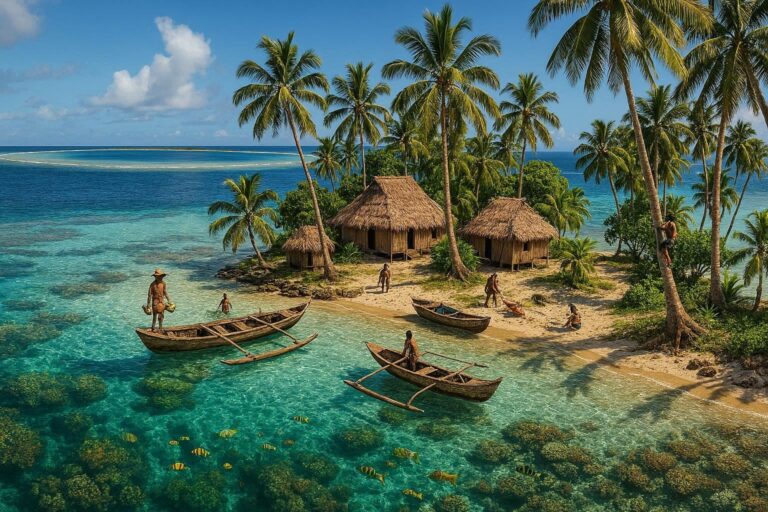
Atolls are low-lying coral ring islands found predominantly across the Pacific and Indian Oceans. The communities that call them home have developed sophisticated systems of navigation, resource management, and cultural identity—forged over centuries of isolation, ecological constraint, and resilience in…

Human Impacts on Atolls

OIG1 6 7

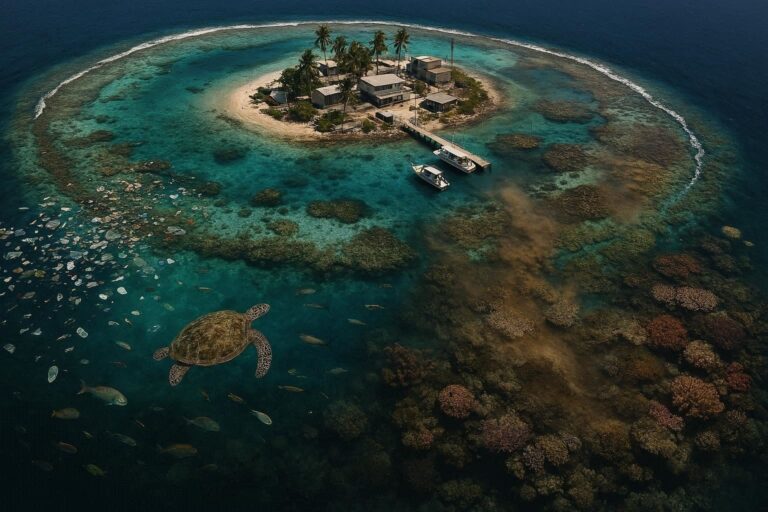
Atolls are among the most geologically unique and ecologically fragile environments on Earth. Formed from ancient coral reefs that encircle shallow lagoons, these low-lying ring-shaped islands exist at the precise intersection of land and sea—a balance that has sustained human…

Atolls and Tourism

OIG2 4 16

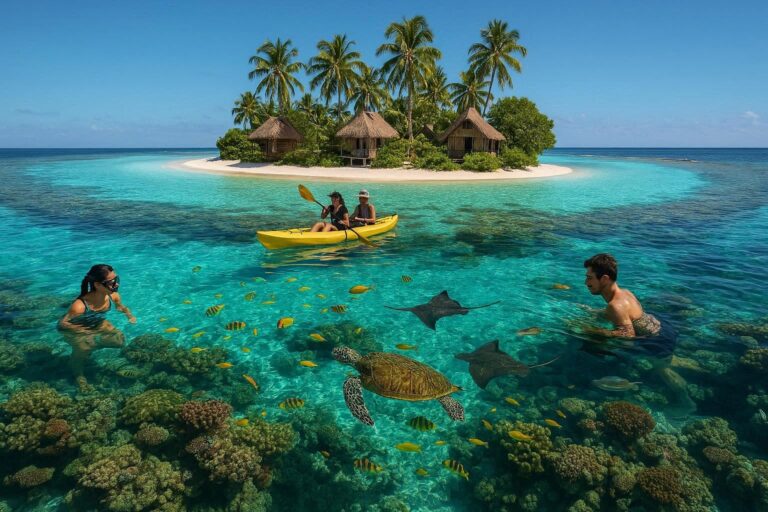
Coral atolls rank among the most visually striking landscapes on Earth—low-lying rings of reef and sand encircling calm, turquoise lagoons that stretch far beyond the horizon. They attract millions of visitors each year, drawn by the promise of pristine waters,…

Atolls and Climate Change

OIG2 5 11

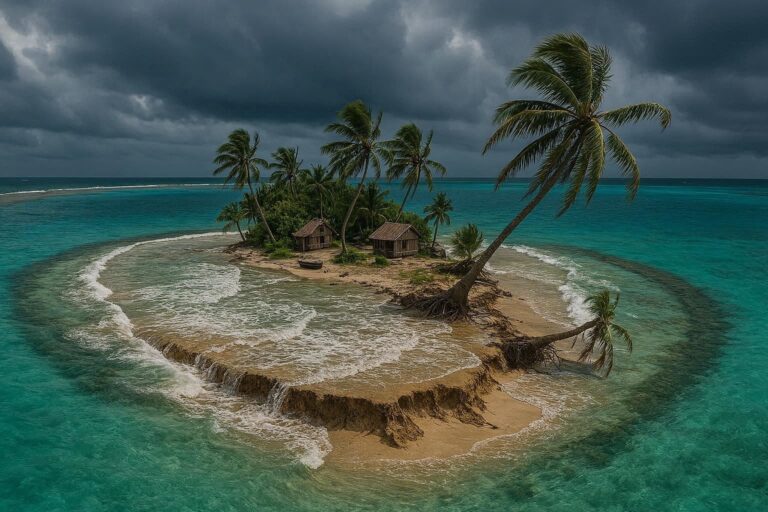
Atolls—low-lying coral ring islands—face existential threats from climate-driven sea-level rise, intensifying storms, and coral bleaching. Nations like Kiribati and the Maldives may become uninhabitable within decades, forcing governments to pursue radical adaptation strategies, including land reclamation, international relocation agreements, and…

Island Arcs Explained

OIG4 1 1 19

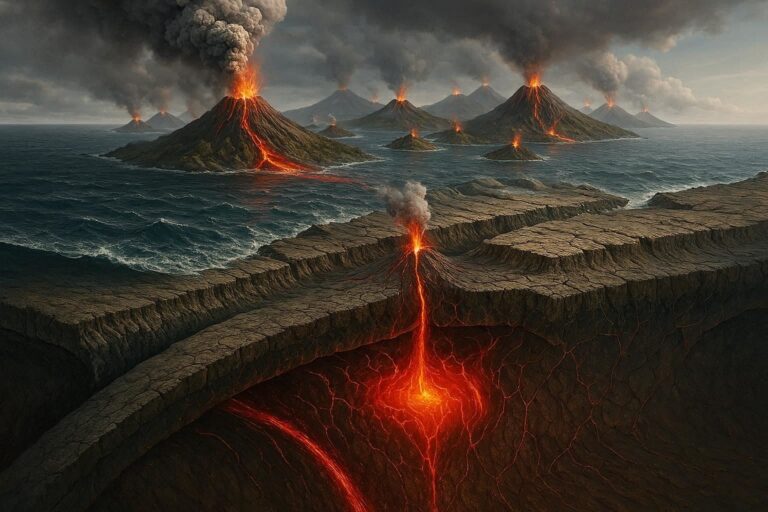
Beneath the ocean’s surface, one of Earth’s most dramatic geological processes is quietly reshaping the planet. Island arcs—curved chains of volcanic islands that rise from the seafloor—are far more than scenic specks of land scattered across the Pacific or Caribbean.…

How Island Arcs Form

OIG1.WAr9WAMO.P6fX

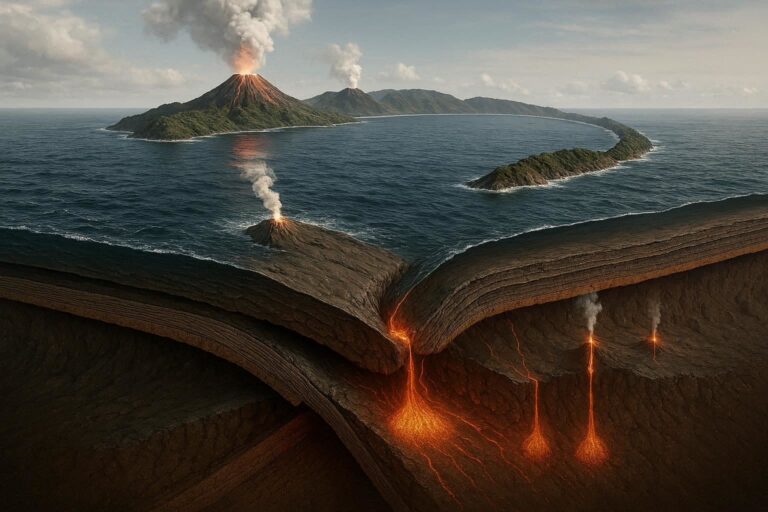
Island arcs are curved chains of volcanic islands that form when one tectonic plate subducts beneath another, triggering partial melting of the mantle and driving volcanic activity at the surface. They are among Earth’s most geologically active environments, shaping ocean…

Types of Island Arcs

OIG1.tp

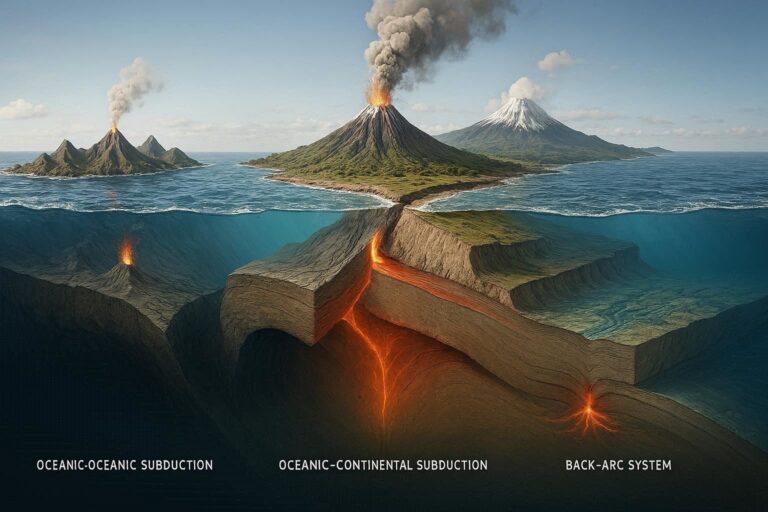
Island arcs are curved chains of volcanic islands formed at subduction zones, where one tectonic plate descends beneath another. The three main types—oceanic–oceanic, oceanic–continental, and back-arc systems—differ in the plates involved, their geological structure, and the nature of the volcanic…