Category MOUNTAINS

Conservation Strategies for Mountain Ecology

OIG1 46

Mountains cover roughly a quarter of the Earth’s land surface and shelter a remarkable concentration of life. From snow leopards prowling the Himalayas to alpine wildflowers clinging to rocky slopes, these high-altitude regions hold biodiversity found nowhere else. They also…

Himalayas: Fragile Ecosystem

OIG1.4c6TYtJc8uowO

The Himalayas stand as one of Earth’s most remarkable natural wonders, stretching across five countries and harboring an extraordinary range of life. Yet beneath their towering peaks lies a delicate balance—one that grows increasingly vulnerable with each passing year. This…

Andes: Unique Species and Ecology

OIG2 1 33

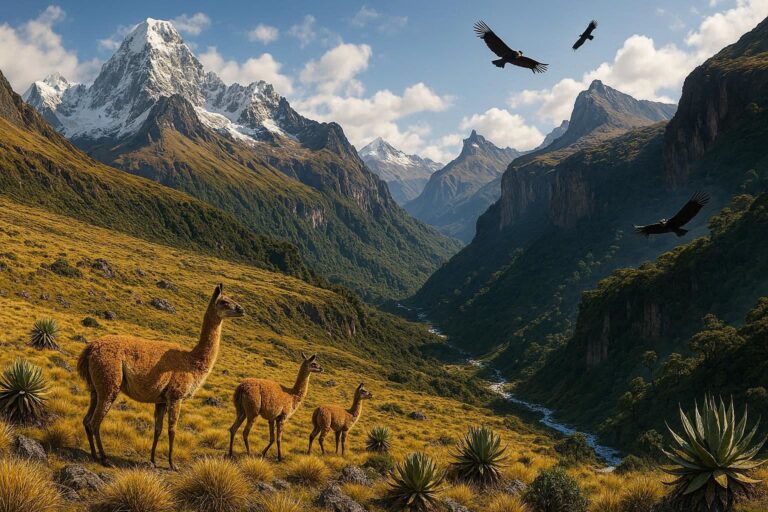
Stretching roughly 7,000 kilometers down the western edge of South America, the Andes form the longest continental mountain range on Earth. They run through seven countries—Venezuela, Colombia, Ecuador, Peru, Bolivia, Chile, and Argentina—and rise to nearly 6,961 meters at Aconcagua,…

Introduction to Mountain Geography

OIG2 3 1 4

Mountains cover roughly a quarter of the Earth’s land surface, yet they hold a significance far greater than their footprint suggests. They shape weather patterns, store freshwater for billions of people, and host some of the planet’s most unique ecosystems.…

Mountains and Climate

OIG4 2 23

Mountains do far more than dominate the skyline. These towering landforms act as powerful climate engines, steering weather patterns, redistributing rainfall, and creating dramatically different environments within just a few miles. From the snow-capped Himalayas to the rugged Andes, mountain…

Natural Hazards in Mountain Geography

OIG4 53

Mountains shape the planet in dramatic ways. They influence weather, store fresh water, and provide homes for millions of people. Yet these same landscapes hold some of the most powerful and unpredictable natural hazards on Earth. The steep slopes, unstable…