Category GEOLOGY

What Is Sedimentology?

OIG2 2

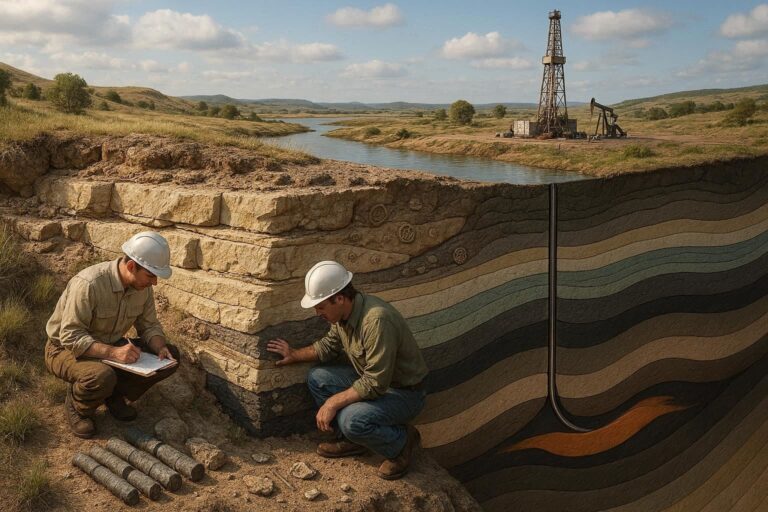
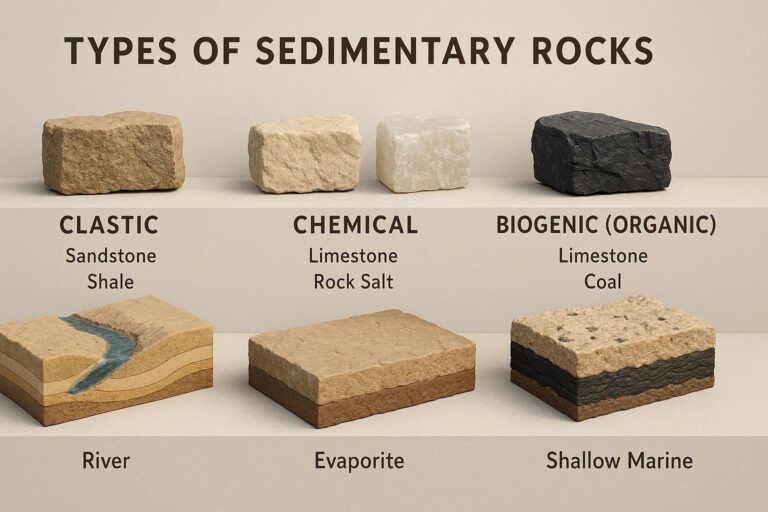
Sedimentology is the scientific study of sediments—loose particles of mineral, rock, and organic matter—and the processes that form, transport, and deposit them. Sedimentologists analyze sedimentary rocks to reconstruct past environments, understand geological history, and locate natural resources such as oil,…

Sediment Formation Processes

OIG2.KdiM8xCNpey

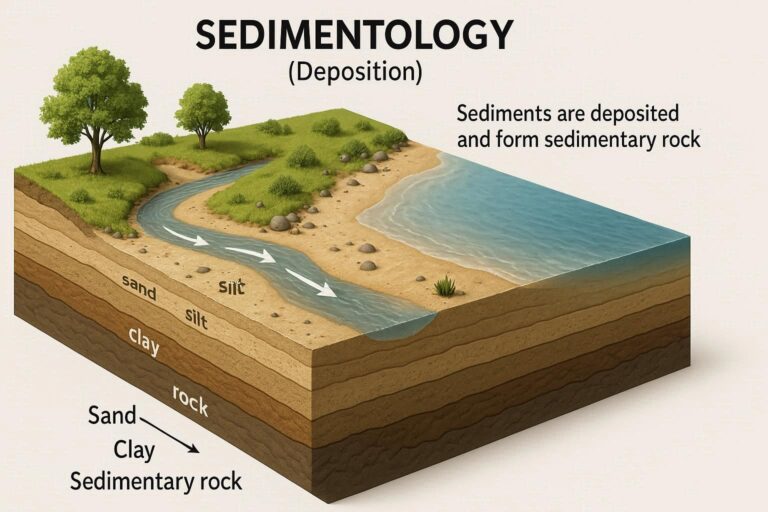
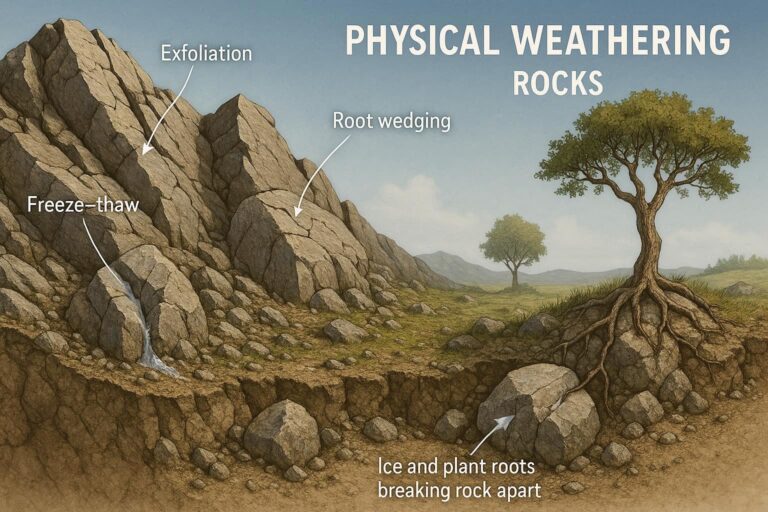
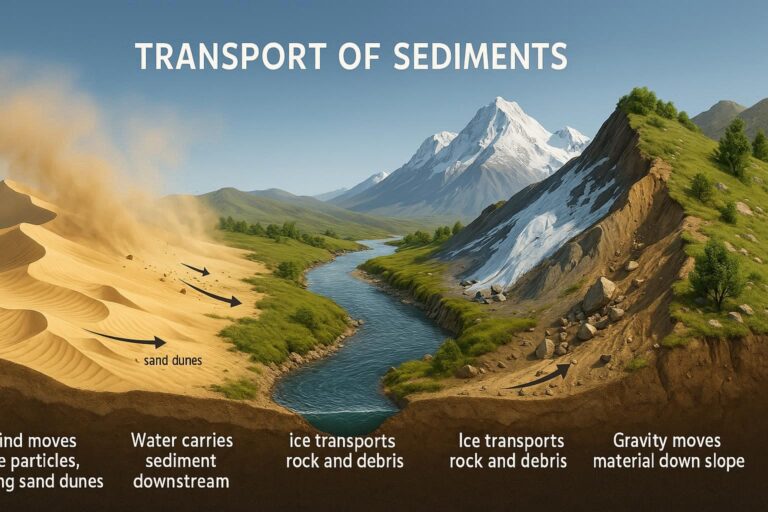
Sediment forms through three interconnected processes—weathering breaks down rock and organic material, transport carries the resulting particles across landscapes, and deposition settles them into layers that eventually become sedimentary rock. Together, these processes shape Earth’s surface and preserve a detailed…

Lithification

OIG4 1

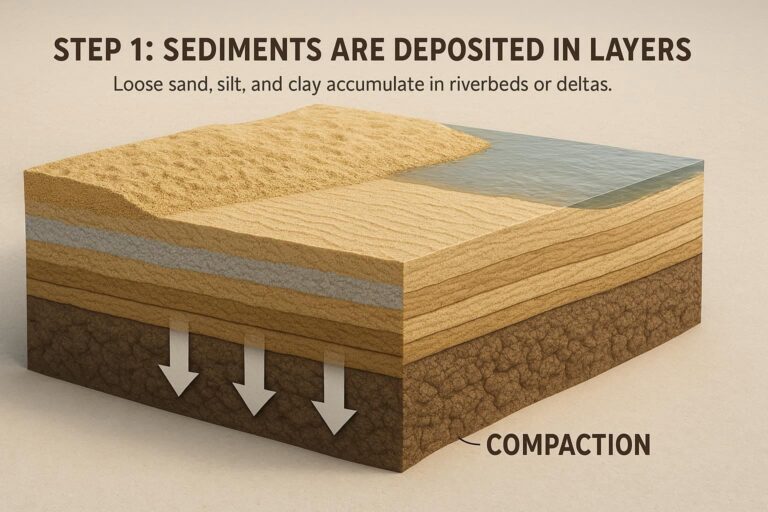
Beneath every mountain range, ocean floor, and desert plain lies a record of Earth’s history—written not in ink, but in stone. That record exists because of lithification, the geological process through which loose sediments gradually compact and cement into solid…

Fluvial (River) Systems

OIG4 1 1

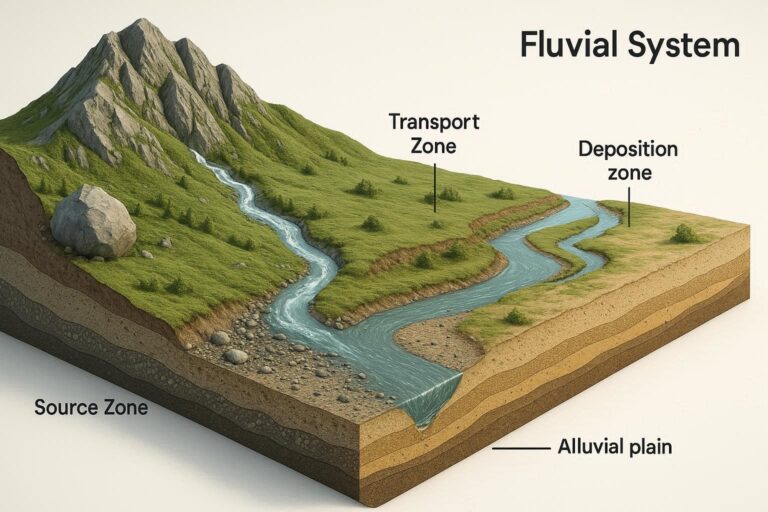
Rivers are among the most powerful forces shaping the planet’s surface. From the Amazon carving through South America’s rainforest to the Nile threading across the Sahara, fluvial systems—the networks of rivers, streams, and the processes that drive them—have sculpted landscapes,…

Marine and Coastal Sediments

OIG4 2

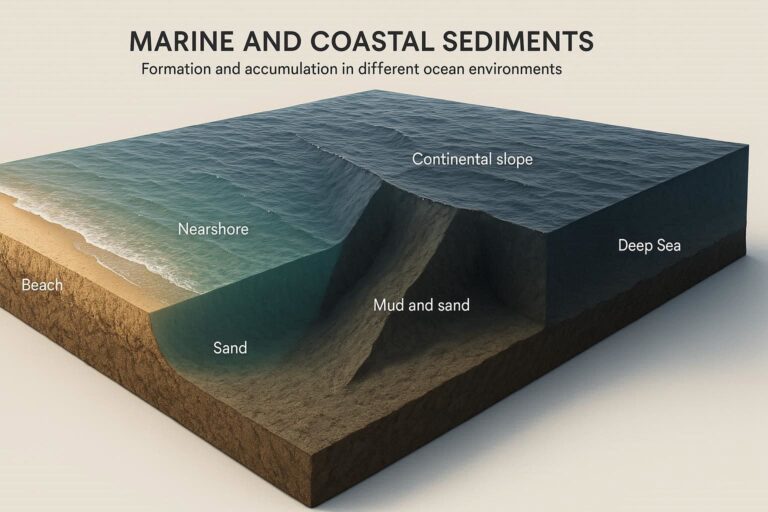
Marine and coastal sediments are accumulations of mineral particles, organic matter, and biological material deposited in ocean and shoreline environments. They record Earth’s geological and climatic history, support diverse ecosystems, and play a critical role in global carbon cycling, coastal…

Desert and Aeolian Environments

OIG3 2 1

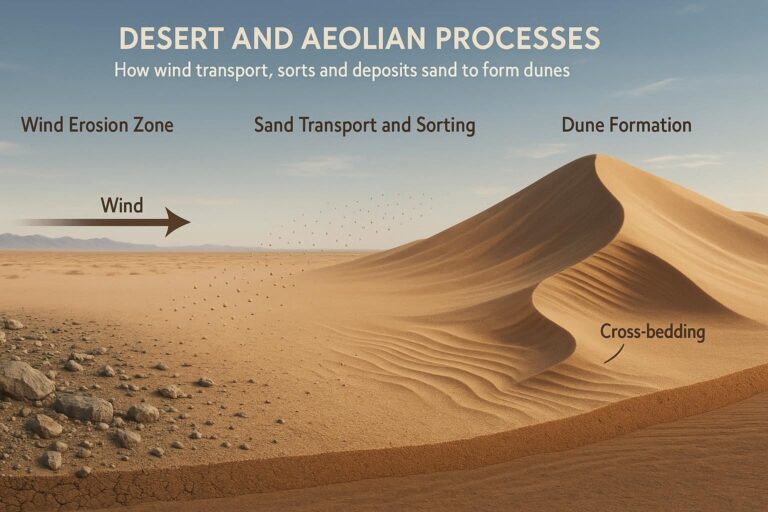
Deserts cover approximately one-third of Earth’s land surface, making them the planet’s most expansive terrestrial biome. Far from being barren wastelands, these regions pulse with geological activity, host remarkable biodiversity, and shape the climatic systems of entire continents. Aeolian processes—those…

Glacial Environments

OIG1.h

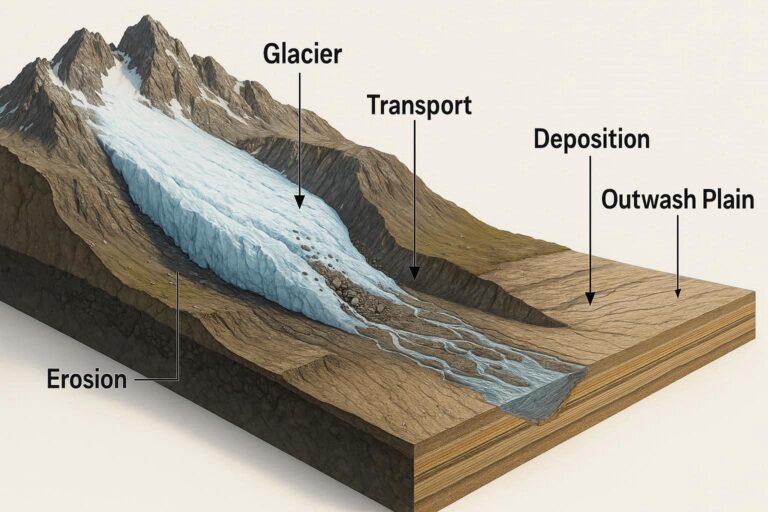
Glacial environments rank among the most powerful and awe-inspiring systems on Earth. Covering approximately 10% of the planet’s land surface today—and far more during past ice ages—glaciers and ice sheets have sculpted continents, redirected rivers, and left behind landscapes that…