

Canyons stand as monumental testaments to the sheer power of nature. These deep, narrow valleys with steep sides are carved into the Earth over millions of years. They form primarily through the relentless action of water, as rivers slice through rock layers, carrying away sediment grain by grain. Wind, ice, and shifting tectonic plates also play vital roles in shaping these massive geological features.
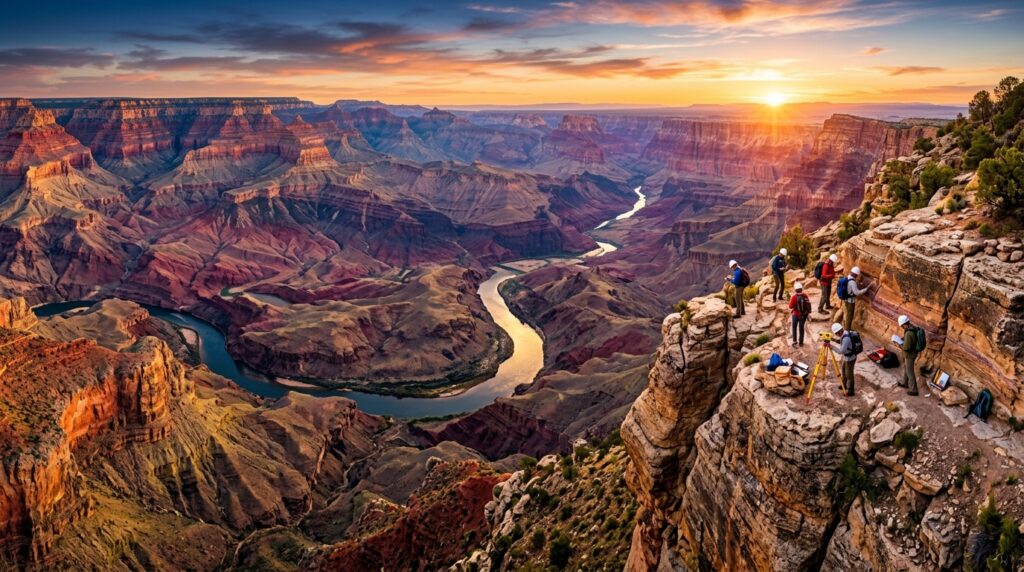
These natural wonders capture the imagination of millions of visitors every year. Scientists flock to them because their exposed rock walls act like an open book, revealing Earth’s history in vivid detail. By studying the layers of rock, researchers can understand ancient climates, past ecosystems, and the immense tectonic forces that shaped our continents. Public interest is equally strong, driven by the breathtaking beauty and immense scale of these landscapes.
The sheer diversity among the world’s canyons is staggering. Some are carved into arid deserts, displaying brilliant reds and oranges under the hot sun. Others are hidden in dense tropical mountains, covered in lush vegetation and veiled in mist. Every canyon tells a specific story about its environment.
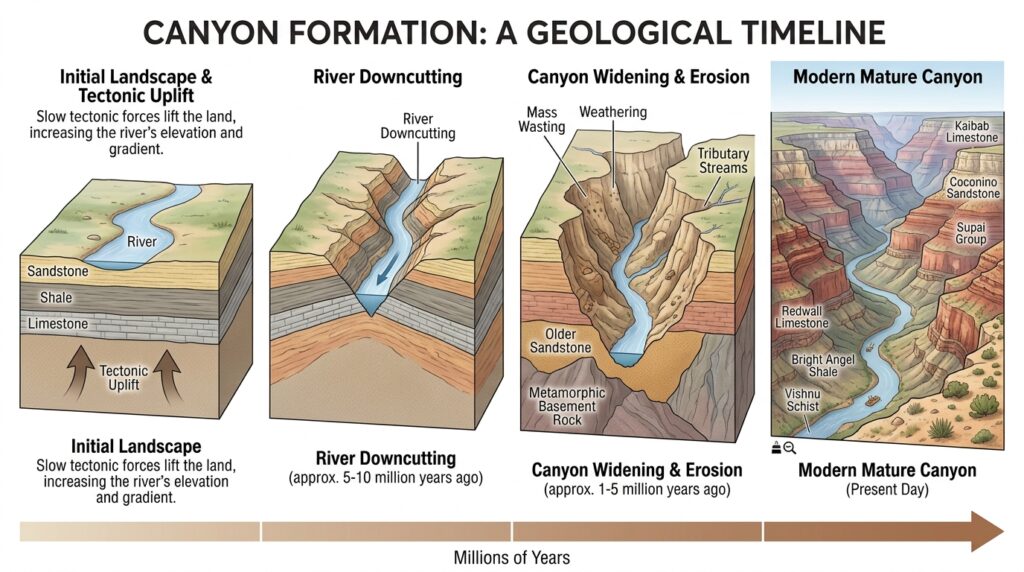
Understanding how these formations come to be requires looking at four critical factors: erosion, river systems, tectonic activity, and time. Water acts as the primary sculptor. Tectonic uplift raises the land, giving rivers the elevation they need to cut deeply into the earth. Time allows these incredibly slow processes to create landscapes of unimaginable scale. Let us examine the specific geological features that make these famous canyons so unique.
What Makes a Canyon Geologically Unique?
Rock Composition
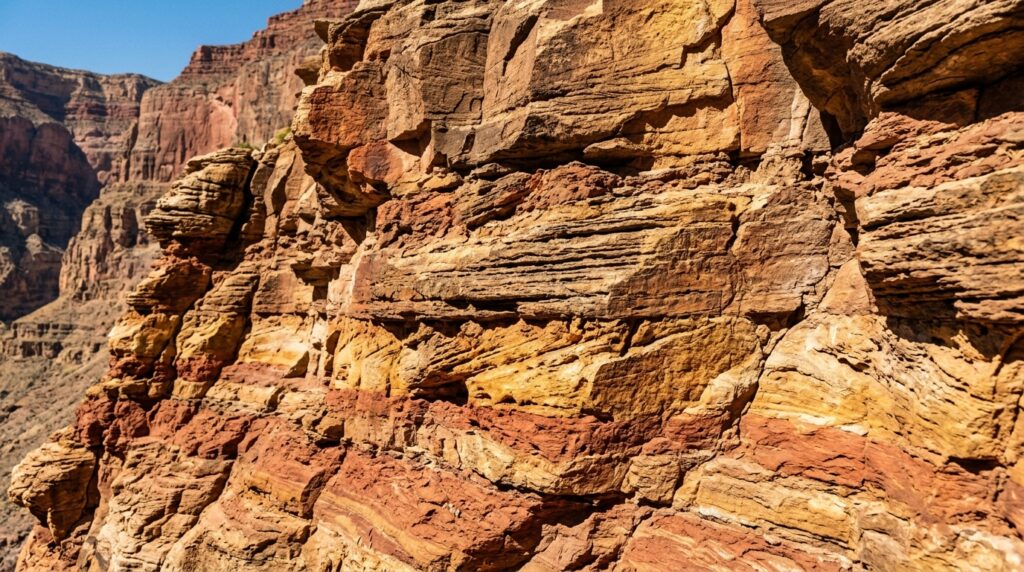
The type of rock found in a canyon dictates its shape, color, and lifespan. Sedimentary rocks, like sandstone and limestone, are common in many famous canyons. They form in distinct, colorful layers that erode at different rates, creating step-like formations. Igneous and metamorphic rocks are generally harder and more resistant to erosion. When a river hits these tough rocks, it often creates steep, narrow gorges. The colorful mineral layers found in these rocks provide the vibrant bands of red, yellow, and green that make these landscapes famous.
Erosion Processes
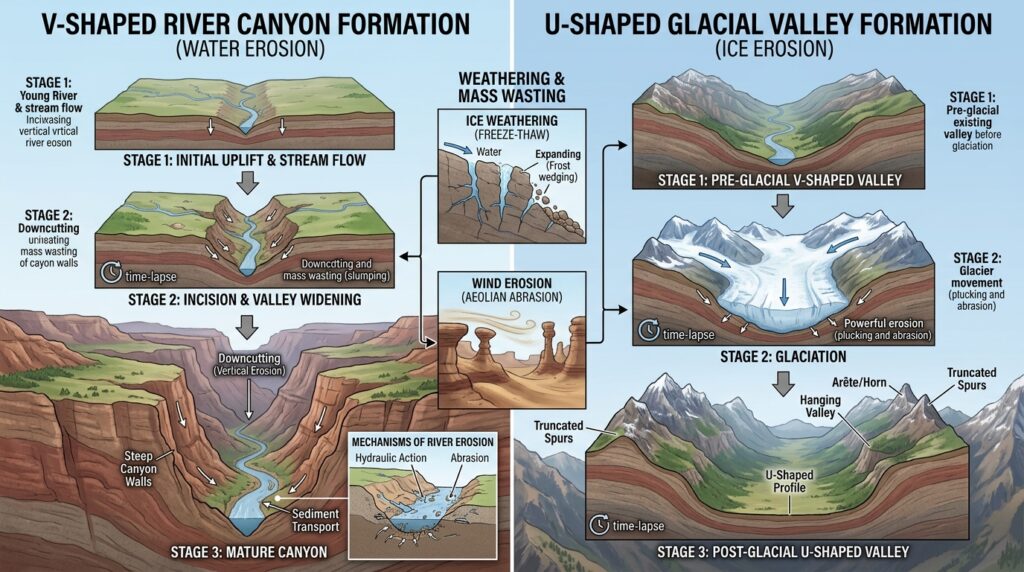
Erosion is the driving force behind canyon formation. River erosion is the most significant factor, as flowing water continuously scours the canyon floor. Wind also plays a role, acting like sandpaper against the upper cliffs to round off sharp edges. In certain mountainous regions, glaciers have historically moved through valleys. These massive rivers of ice carve out wide, U-shaped canyons that look distinctly different from the V-shaped profiles created by rivers.
Tectonic Activity
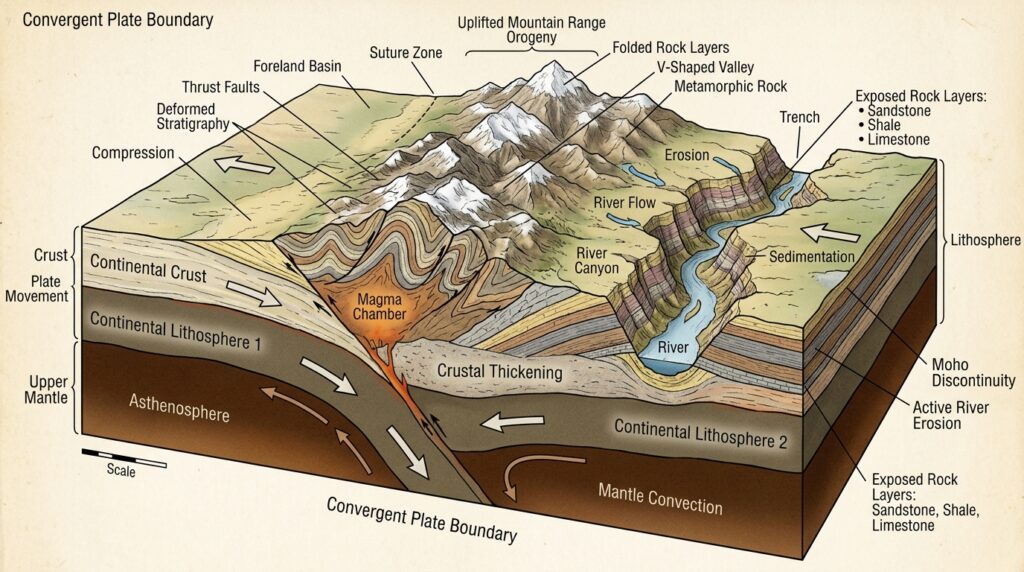
Without tectonic uplift, many of the world’s deepest canyons would not exist. When tectonic plates collide or push against each other, they force the land upward. As the land rises, rivers flow faster and cut deeper into the rock. Faulting and folding also shape canyon structures. Earthquakes and shifting crusts can create weak points in the rock, directing the flow of water and determining exactly where a canyon will form.
Climate Influence
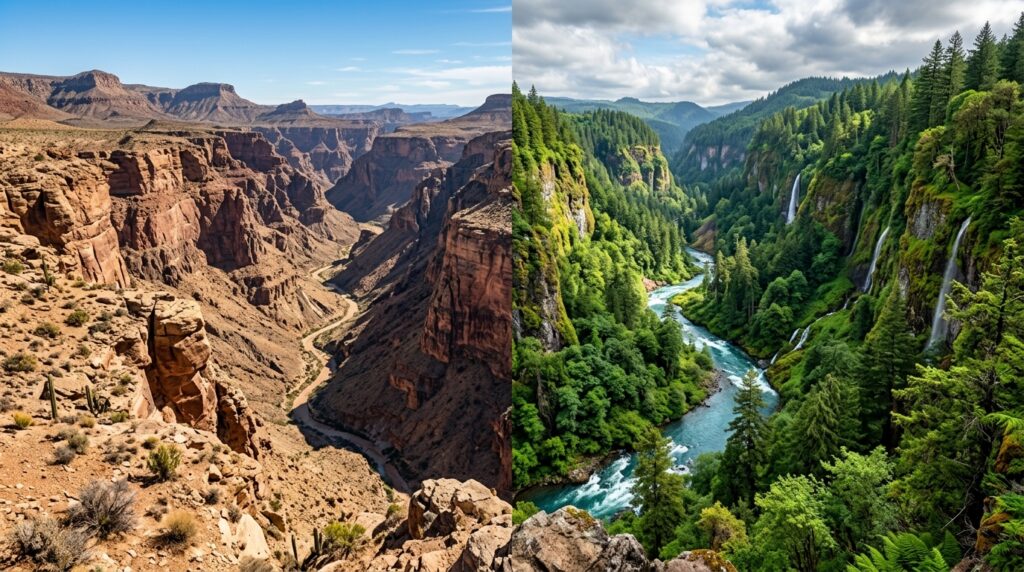
The local climate heavily influences a canyon’s appearance and erosion rate. Desert canyons often have steep, jagged walls because there is very little rainfall to wash away the upper edges. The sparse vegetation leaves the rock entirely exposed to the elements. In contrast, humid environments produce canyons with softer, sloping profiles. Heavy rainfall accelerates erosion, and thick vegetation helps hold the soil together, resulting in a very different geological landscape.
Grand Canyon
Geological Overview
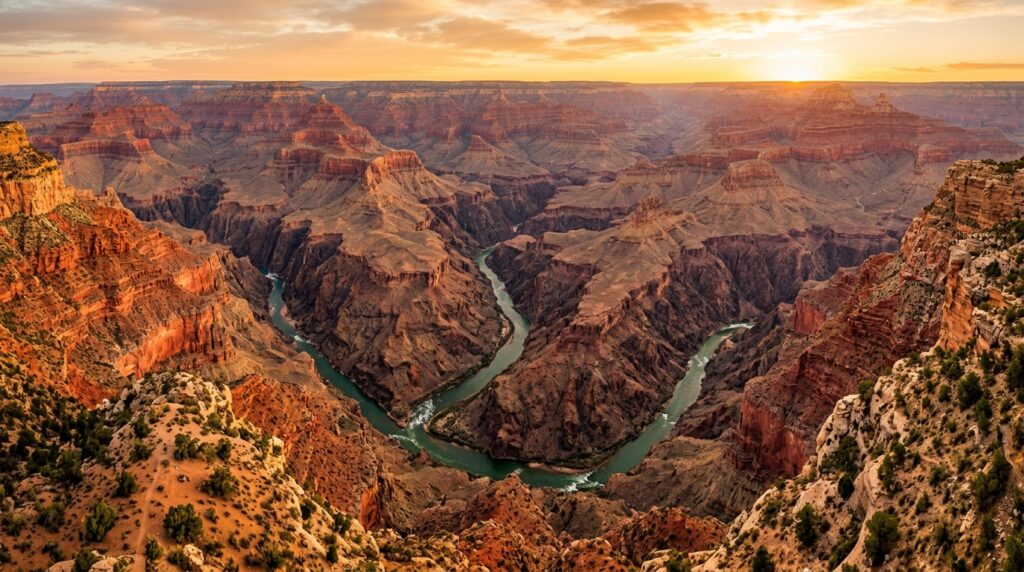
Located in the United States, the Grand Canyon is perhaps the most famous geological feature on the planet. It was carved primarily by the Colorado River over the last five to six million years. However, the rocks exposed at the bottom of the canyon are incredibly ancient. They represent nearly two billion years of Earth’s geological history, offering an unparalleled glimpse into the deep past.
Unique Geological Features
The canyon is renowned for its massive, layered sedimentary rocks. These layers are stacked like pancakes, revealing different eras of marine and terrestrial environments. One of the most fascinating features is the Great Unconformity. This is a visible gap in the rock record where over a billion years of geological history is simply missing, eroded away before newer layers were deposited. The deep erosion reveals colorful rock bands that change hues as the sun moves across the sky.
Scientific Importance
Geologists consider the Grand Canyon to be one of the world’s greatest geological records. It provides a continuous, accessible timeline of Earth’s history. It is a key site for studying how rivers erode landscapes and how tectonic uplift affects continental plates.
Yarlung Tsangpo Grand Canyon
Geological Overview
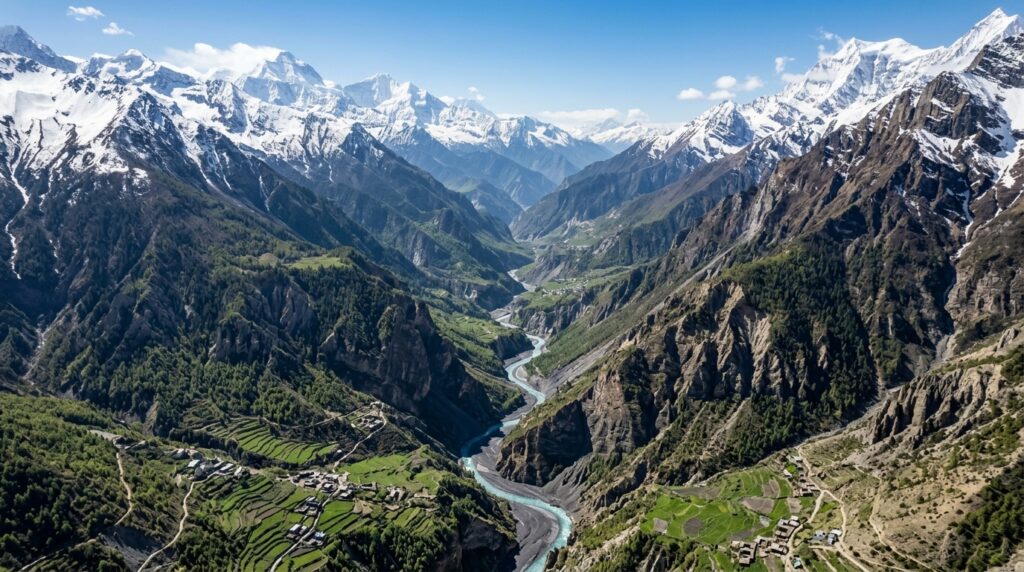
Tucked away near the Himalayas in Tibet, the Yarlung Tsangpo Grand Canyon is often considered the deepest canyon in the world. It plunges to astonishing depths as the Yarlung Tsangpo River cuts through the massive mountain ranges.
Unique Geological Features
This canyon is defined by extreme tectonic uplift. The Indian tectonic plate is continuously crashing into the Eurasian plate, pushing the Himalayas higher every year. This interacts directly with the rapid river erosion. As the mountains rise, the river cuts down with incredible force, creating steep, dramatic gorges. Because the canyon drops from freezing alpine peaks to tropical valleys, it supports wildly diverse ecosystems within a very short distance.
Geological Significance
The Yarlung Tsangpo Grand Canyon is a crucial location for scientists studying plate tectonics. The interaction between rapid uplift and extreme erosion provides valuable data on how mountain building works in real time.
Fish River Canyon
Geological Overview
Fish River Canyon in Namibia stands as one of Africa’s largest and most impressive canyons. It was formed through a complex combination of water erosion and the collapse of ancient valley floors due to tectonic faulting.
Unique Geological Features
The canyon exposes ancient rock formations that date back hundreds of millions of years. It sits in a dry, harsh desert environment with very sparse vegetation. This lack of plant life leaves the raw geology completely visible. The canyon features a wide, flat floor bordered by immense, steep cliffs that plunge dramatically from the surrounding plateau.
Geological Importance
Studying Fish River Canyon reveals the ancient geological history of southern Africa. It provides clues about the supercontinent Gondwana and the tectonic forces that eventually tore it apart.
Colca Canyon
Geological Overview
Located high in the Andes Mountains of Peru, Colca Canyon is one of the deepest canyons in the world. It is a striking landscape where high-altitude geography meets deep river gorges.
Unique Geological Features
Unlike canyons carved entirely from sedimentary rock, Colca Canyon features extensive volcanic rock formations. The region is highly active seismically, and ancient volcanoes have left their mark on the canyon walls. Additionally, the slopes of the canyon are highly terraced. These terraces were shaped by pre-Incan and Incan human agriculture, blending human engineering with natural geology.
Ecological and Geological Importance
Colca Canyon is a prime example of the interaction between active geology and human settlement. It also serves as a crucial habitat for the Andean condor, a massive bird that relies on the strong thermal currents generated by the canyon’s steep, sun-baked walls.
Antelope Canyon
Geological Overview
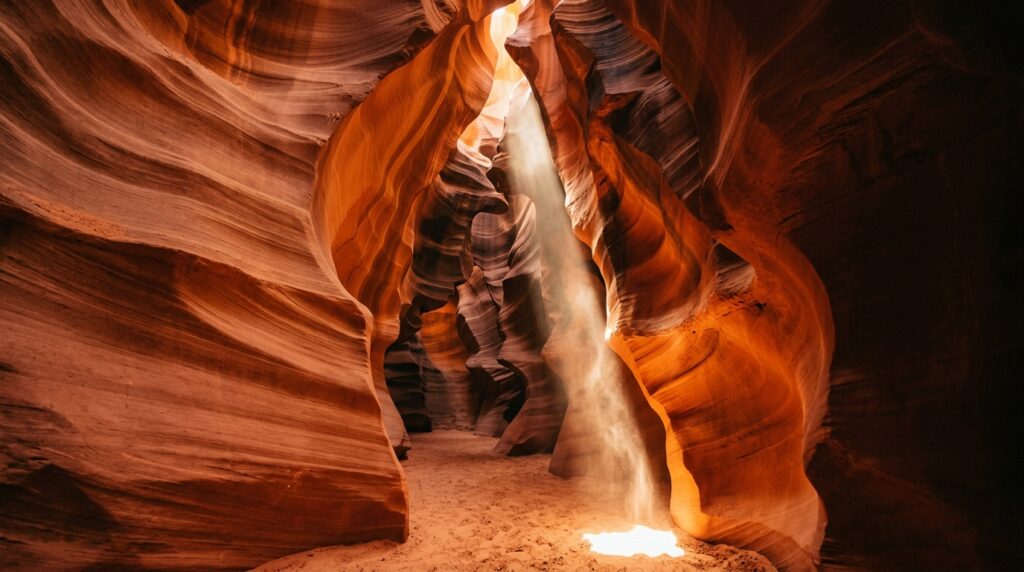
Antelope Canyon in the American Southwest is a world-famous slot canyon. Unlike the massive expanse of the Grand Canyon, Antelope is narrow, intimate, and carved entirely into Navajo sandstone.
Unique Geological Features
The canyon is defined by its incredibly narrow, winding passages. The walls feature smooth, wave-like rock textures that look almost fluid. During certain times of the year, light beams filter down through cracks in the roof, creating brilliant, glowing colors on the sandstone walls.
Formation Process
Antelope Canyon was not carved by a continuous river. Instead, it was formed by powerful flash floods. During monsoon season, water rushes across the desert basin, picking up abrasive sand. This sandy water funnels into narrow cracks in the rock, scouring the walls and creating the smooth, flowing shapes visible today.
Copper Canyon
Geological Overview
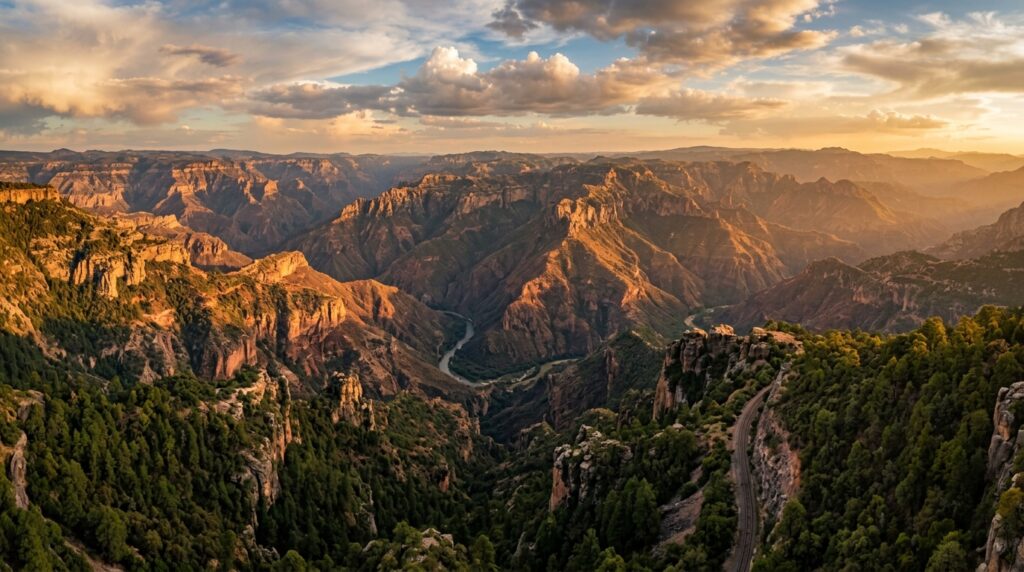
Located in Mexico, Copper Canyon is actually a network of multiple connected canyons rather than a single gorge. When combined, this massive system is larger in total area than the Grand Canyon.
Unique Geological Features
The geology here is characterized by rugged volcanic terrain. Millions of years ago, massive volcanic eruptions covered the region in ash and lava. Over time, rivers carved deep ravines and steep slopes into this volcanic rock. Because the canyons are so deep, they feature diverse climate zones, shifting from cool alpine forests at the rim to subtropical environments at the canyon floor.
Cultural and Geological Importance
Copper Canyon is home to the Indigenous Tarahumara communities, who have adapted to the extreme geography. The dramatic elevation changes also foster a rich biodiversity, making it a critical region for biological and geological study.
Kings Canyon
Geological Overview
Situated in the heart of central Australia, Kings Canyon is a spectacular sandstone gorge. It sits within the arid environment of the Northern Territory, surrounded by expansive desert.
Unique Geological Features
The canyon is famous for its remarkably tall, sheer sandstone walls. At the top of the canyon, visitors find domed rock formations affectionately known as the “Lost City.” These rocks provide striking evidence of ancient desert environments, as the sandstone itself was originally formed from massive sand dunes millions of years ago.
Geological Significance
Kings Canyon is significant because it exposes ancient sedimentary processes. It allows geologists to study the climate of ancient Australia and understand how wind and water transform loose sand into solid rock over millennia.
Bryce Canyon
Geological Overview
Despite its name, Bryce Canyon in Utah is technically not a true canyon. It was not formed by a river flowing through a central channel. Instead, it is a series of massive natural amphitheaters carved into the edge of a high plateau.
Unique Geological Features
Bryce is globally recognized for its hoodoos, which are thin, towering rock spires that rise from the amphitheater floor. These formations are uniquely shaped by frost weathering. Water seeps into cracks in the rock, freezes expands, and shatters the stone. This constant freezing and thawing, combined with the vibrant red, orange, and white colors of the rock, creates an otherworldly landscape.
Geological Importance
Bryce Canyon serves as an excellent, highly visible example of weathering and erosion processes. It demonstrates how chemical weathering and frost wedging can sculpt landscapes just as dramatically as a rushing river.
Comparing the World’s Famous Canyons
Depth and Size
When comparing these geological giants, the metrics of depth and size vary wildly. The Yarlung Tsangpo and Colca canyons compete for the title of deepest, plunging miles into the earth. In contrast, the Grand Canyon and Copper Canyon boast immense width and total area, dominating the landscape for hundreds of square miles. Antelope Canyon is tiny by comparison, sometimes only wide enough for a single person to pass through.
Climate Differences
The environment dictates the character of the canyon. Fish River and Kings canyons showcase harsh, dry desert environments. The Yarlung Tsangpo canyon spans from freezing alpine conditions to lush tropical zones. Copper Canyon features temperate forests on its rim and humid conditions at its base.
Rock Types and Colors
Rock composition provides the visual signature of these locations. Bryce and Antelope canyons feature bright red and orange sandstone. Colca and Copper canyons reveal dark, rugged volcanic rock. The Grand Canyon offers a full spectrum, displaying sandstone, limestone, and deep metamorphic formations in varying shades of pink, brown, and green.
Formation Processes
While river erosion is the most common denominator, the specifics matter. The Colorado River steadily ground down the Grand Canyon. Tectonic uplift rapidly drove the deepening of the Yarlung Tsangpo. Violent, intermittent flash floods carved Antelope Canyon.
Human and Scientific Importance of Famous Canyons
Tourism and Recreation
These geological wonders are massive drivers for local economies. They offer unparalleled opportunities for hiking, white-water rafting, sightseeing, and photography. Millions of people travel great distances simply to stand at the rim of these immense valleys.
Geological Research
For scientists, canyons are natural laboratories. They provide access to rock layers that would otherwise be buried miles underground. This access is crucial for understanding Earth’s history, tracking ancient climate changes, and mapping tectonic activity.
Biodiversity and Ecosystems
The sheer vertical drop of a large canyon creates multiple microclimates. These varied habitats support incredible biodiversity. Plants and animals adapt to the specific elevations and temperatures, creating isolated ecosystems that thrive within the canyon walls.
Cultural Heritage
Canyons are deeply significant to human history. Indigenous communities have lived in and around these formations for thousands of years. They contain priceless archaeological sites, ancient petroglyphs, and ongoing cultural traditions intimately tied to the landscape.
Conservation Challenges
The popularity and environmental sensitivity of these landscapes create significant conservation challenges. Tourism pressure leads to trail erosion, littering, and disruption of local wildlife. Human foot traffic in delicate areas like Antelope Canyon can literally wear away the rock.
Climate change also threatens these environments. Shifts in rainfall patterns alter the natural erosion processes. Prolonged droughts dry up the rivers that sustain canyon ecosystems. Furthermore, water management and dam construction on vital rivers alter natural water flows, flooding historical sites and destroying natural habitats. Protecting the geological and cultural heritage of these regions requires strict management and international cooperation.
Preserving the World’s Canyons for the Future
Famous canyons serve as breathtaking showcases of Earth’s geological diversity. Every canyon reflects a highly specific combination of erosion, rock type, climate, and tectonic activity that cannot be replicated anywhere else.
These massive landscapes are far more than just beautiful views. They function as critical scientific archives, recording billions of years of planetary history. They are also vital cultural treasures, holding the histories and homes of countless communities. Because the geological processes that formed them are incredibly slow, damage to these landscapes is often permanent. Managing tourism carefully and protecting local water sources are essential steps. Preserving these canyon systems ensures that future generations can continue to learn from and marvel at the incredible power of the natural world.